 Proudly Canadian


 Home
 Cooling
 Heating
 Heat Pumps
 Air Quality
 Other
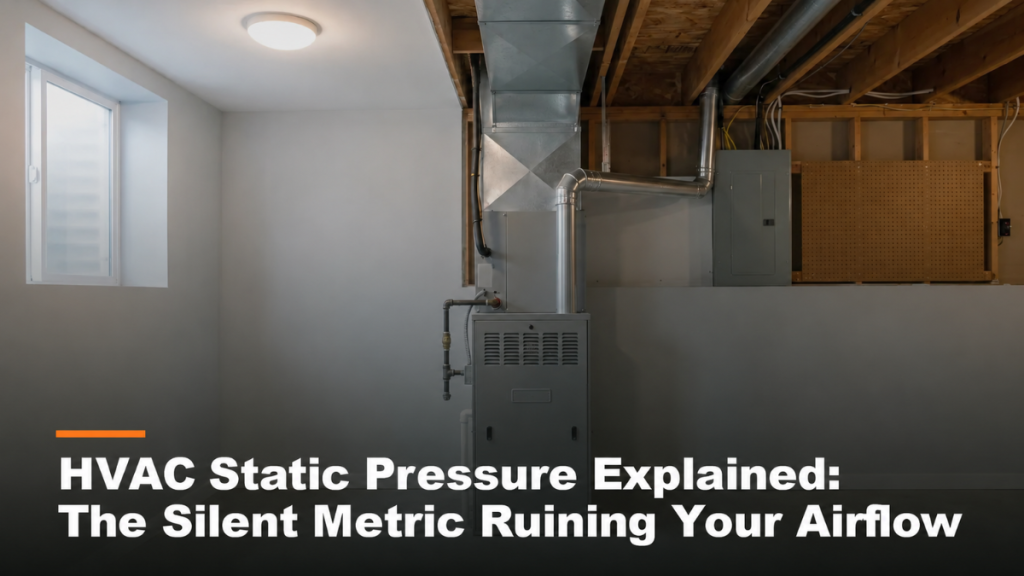
Why does a furnace that sounds like it is running full strength deliver such weak airflow to bedroom vents? The primary hidden cause is total resistance within your duct system, which technicians refer to as high HVAC static pressure. This metric measures the resistance air encounters as the blower motor pushes it through filters, cooling coils, ductwork, and supply registers. When resistance exceeds design limits, system airflow drops significantly and your blower motor strains to compensate.
Airflow resistance cannot be accurately measured by sound or feel alone. A qualified technician uses a digital manometer to compare readings directly against your equipment's factory specifications. This guide explains what resistance metrics mean, where system bottlenecks occur, and which basic checks you can safely perform at home.
What HVAC Static Pressure Actually Measures
Quick Summary:
System resistance restricts essential circulation. Understanding total HVAC static pressure helps homeowners prevent blower motor burnout, balance room temperatures, and reduce unnecessary utility costs.
Think of drinking a thick smoothie through a narrow straw: the higher the resistance, the harder you must pull for each sip. A system blower operates on the exact same principle. It must generate enough force to push air through the entire duct loop, and measuring HVAC static pressure gives an exact reading of that force working against internal friction.
Every furnace and air handler comes with strict manufacturer tolerance limits. Heating and cooling equipment is engineered to deliver target airflow only when internal resistance stays within the rating plate specifications. Inside this safe operating window, the system runs efficiently; above it, airflow drops while energy consumption and mechanical strain surge.
This dynamic explains why two identical furnaces can perform completely differently in separate homes. Variations in duct sizing, filter thickness, and coil cleanliness directly alter overall HVAC static pressure.
Where Airflow Resistance Comes From
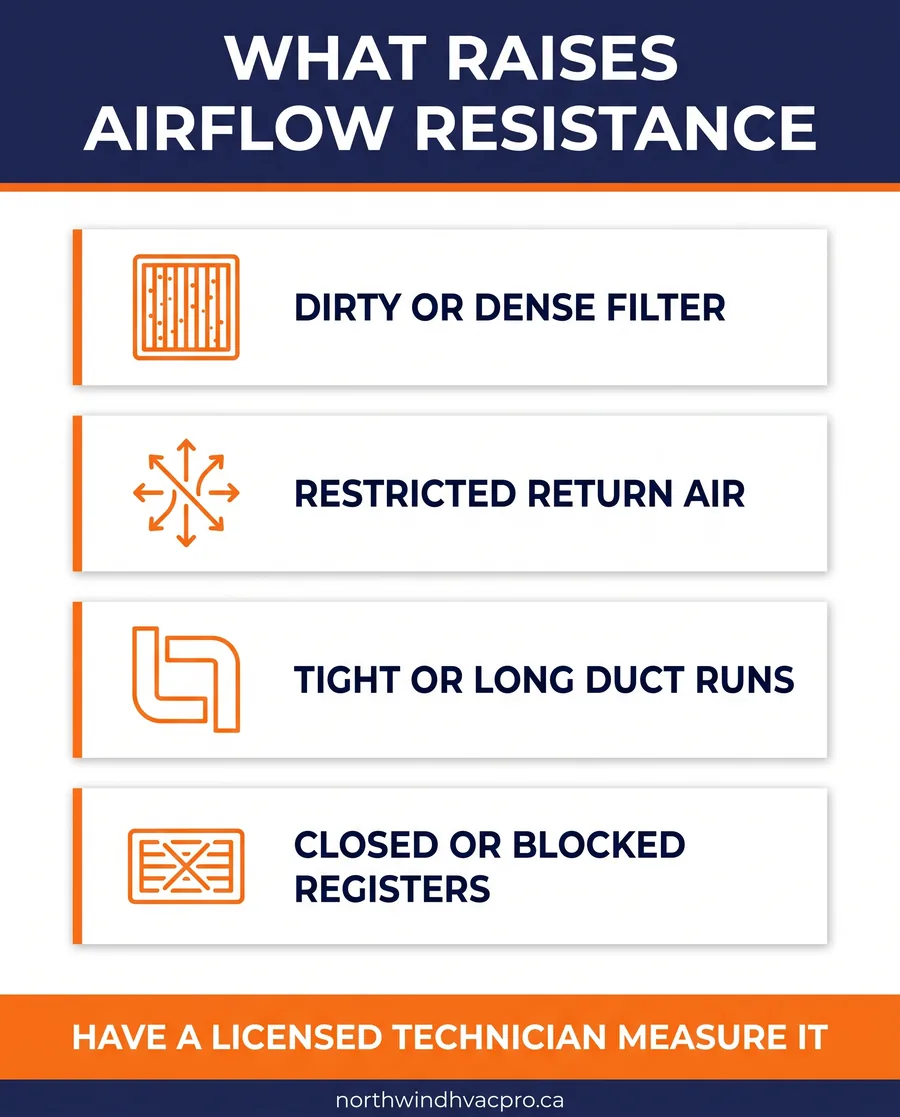
Airflow resistance accumulates continuously across both sides of the ductwork. Common residential bottlenecks include:
- Overly dense, high-MERV air filters or filters clogged with debris.
- Dirty or restricted indoor evaporator coils.
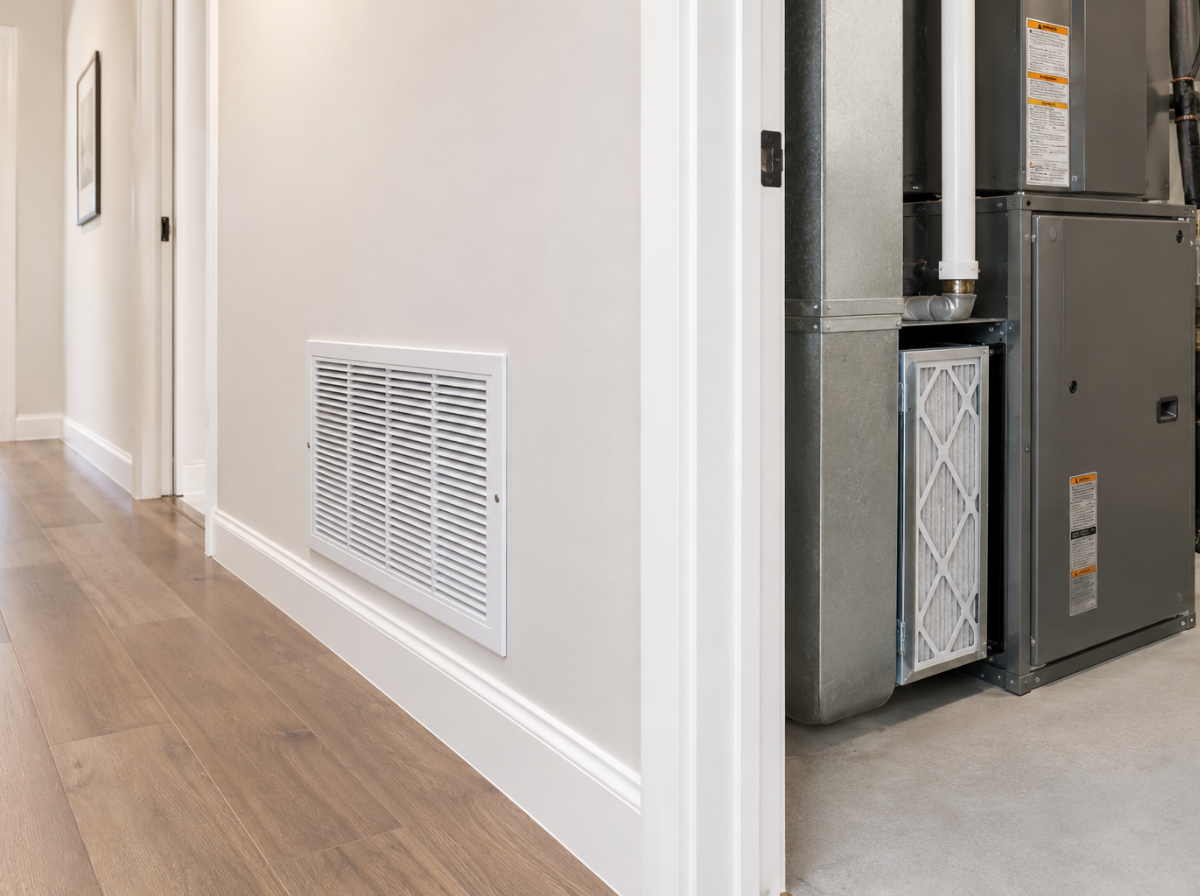
- Undersized return air drops that starve the blower motor.
- Flex ducting that is kinked, sagging, or crushed in crawlspaces.
- Closed or obstructed supply registers in unused rooms.
To keep your system running smoothly between routine maintenance visits, consult our step-by-step guide on changing your furnace filter.
Symptoms Pointing to Excessive Resistance
Elevated pressure levels inside your system rarely produce a single obvious sign. Instead, excessive resistance shows up through noticeable operational symptoms throughout your living space:
| Symptom Observed | Possible Cause | Resolution Action |
|---|---|---|
| Weak airflow at registers | Restricted filter, blocked return, or undersized ducting | Check filter; schedule HVAC inspection for ducting |
| Whistling or rushing air sounds | High-velocity air forcing through restrictive openings | Professional diagnostic recommended |
| Loud or overheating blower motor | Motor operating against higher resistance than engineered for | Professional service required |
| Uneven room temperatures | Poor duct layout, air imbalance, or pressure drops | Airflow balancing and static pressure test |
| System short-cycling | Overheating exchanger tripping high-limit safety switches | Immediate technician inspection |
Safety Alert
If your furnace repeatedly shuts off or trips its high-limit switch, turn the system off at the thermostat and contact a certified professional immediately. Persistent airflow restrictions cause heat exchangers to overheat, risking permanent system failure.
How Technicians Measure Static Pressure
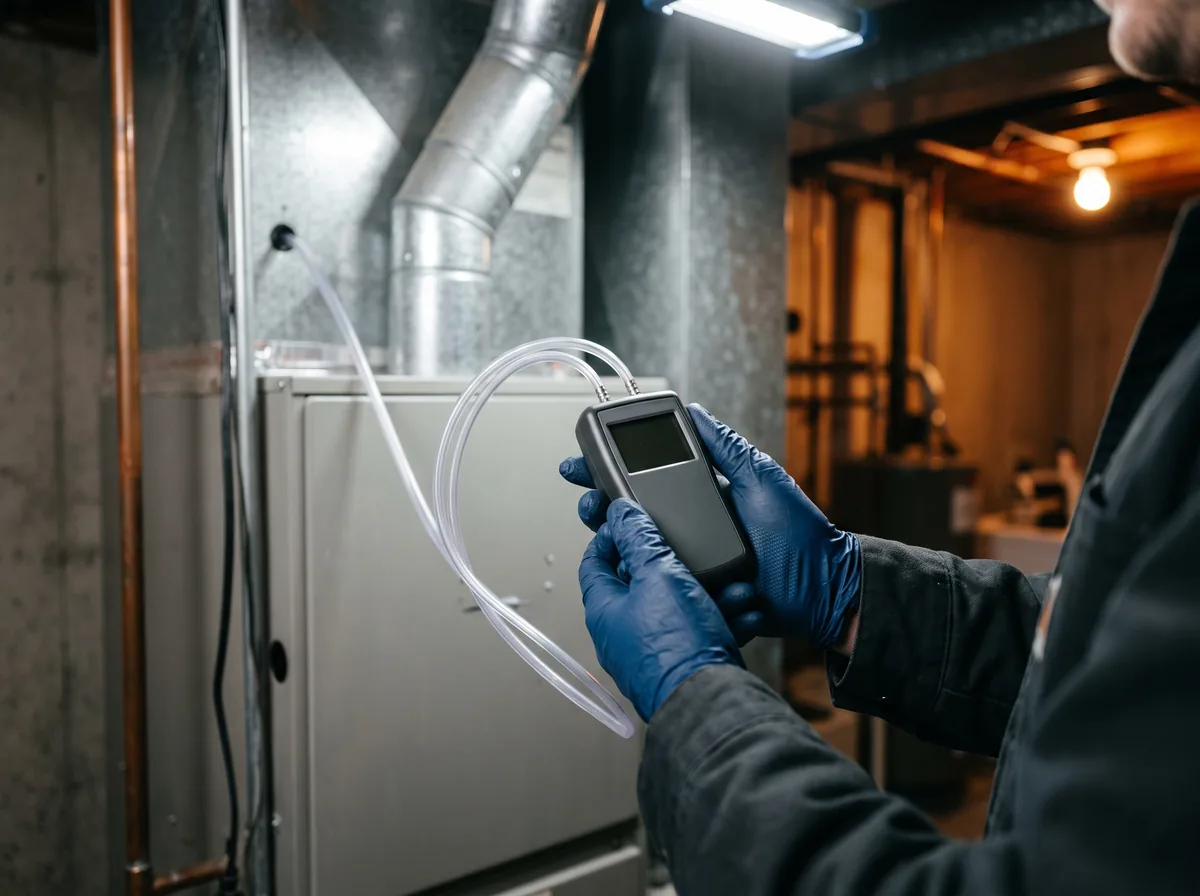
Technicians take precise pressure measurements using a dual-port digital manometer. Test probes are inserted into small ports drilled into the supply plenum (after the indoor coil) and the return plenum (before the air filter). Combining both readings determines your total external HVAC static pressure.
This combined total is evaluated directly against the maximum rating limit printed on your unit's data label. If total airflow resistance exceeds factory parameters, professional airflow corrections or duct modifications are necessary.
Uncorrected resistance remains a leading cause of premature equipment breakdown. According to field research published by the U.S. Department of Energy, high ductwork resistance routinely prevents modern variable-speed blower motors from reaching their rated seasonal efficiency targets.
Pro Tip
Take a photo of your furnace rating plate with your phone. Having your equipment model number and maximum allowable pressure specs handy helps your technician evaluate system performance much faster.
Important Notice
This article provides general troubleshooting information. Electrical, gas, and internal blower modifications should only be completed by qualified HVAC technicians. Do not open sealed equipment cabinets yourself.
Safe Homeowner Checks Before Calling
Before requesting a technician visit, homeowners can complete several safe visual checks with the thermostat turned off:
- Check your air filter and replace dirty media with a manufacturer-recommended MERV rating.
- Verify that supply registers and main return grilles are fully open and clear of rug or furniture obstructions.
- Note specific rooms that consistently experience weak airflow or excessive vent noise.
- Document recent home changes, such as added partitions, closed dampers, or new filter upgrades.
If your system fan runs continuously without delivering proper cooling or heating, review our guide on diagnosing an HVAC blower that runs continuously.
What Professional Fixes Involve
Correcting improper resistance requires targeted adjustments based on where bottlenecks occur. Replacing a restrictive filter with a high-flow media filter can instantly reduce supply-side resistance. In systems starved for return air, technicians often enlarge return drops or install additional return grilles.
When improper duct sizing is the root cause, expert duct modifications are required. If you suspect your ductwork is undersized or leaking, schedule a professional ductwork inspection with NorthWind HVAC to evaluate your system design, rebalance airflow, and bring total system resistance back into optimal operating limits.
Frequently Asked Questions
What is an ideal static pressure reading for home HVAC systems?
Can a high-MERV filter cause high static pressure?
How do I know if my static pressure was tested correctly?
Download the Free Quick Guide
A practical checklist of airflow and pressure questions to ask your technician during your next service visit.
Next Steps for Your System
Start with basic preventative checks: replace dirty filters regularly and ensure supply registers remain open across every room. If low airflow, cold spots, or high motor noise persist, book a formal static pressure check with a licensed professional.
To schedule a comprehensive diagnostic inspection or airflow evaluation, book a free estimate with our team today.
