 Proudly Canadian


 Home
Home Cooling
 Heating
 Heat Pumps
 Air Quality
 Other
Other
You step into the shower, the water runs hot for a minute, and then suddenly turns cold. Or maybe an unfamiliar error code flashes on the front panel. While tankless systems can last up to 20 years, they still require regular maintenance. Recognizing key tankless water heater repair signs early helps you schedule a quick tankless water heater service call before experiencing a total loss of hot water.
Most tankless issues display clear warning indicators early, such as temperature fluctuations, weak water pressure, strange noises, or persistent error codes. Catching these early allows for minor fixes. Ignoring them, however, can lead to mineral scale damaging the heat exchanger, which is the most expensive component in the unit. Here are the crucial warning signs, safe DIY checks, and repairs that require a licensed technician.
Why a tankless water heater is worth repairing
A tankless unit is an efficient home system, and addressing early warning signs avoids unnecessary replacements. Many common faults, such as error codes, drops in water flow, or startup noises, stem from minor component wear or mineral scale build-up rather than system failure.
In areas with hard water like Ontario, mineral scale poses the single largest threat to a heat exchanger. Unchecked scale constricts water passages, forcing the burner to overheat until the exchanger fails. Timely repairs and descaling cost significantly less than a full system replacement.
Quick Take
Most tankless water heater failures begin with small symptoms: fluctuating temperatures, reduced water flow, or fault codes. Addressing these early prevents damage to the heat exchanger. When in doubt, contact a licensed technician to inspect the system.
The primary tankless water heater repair signs
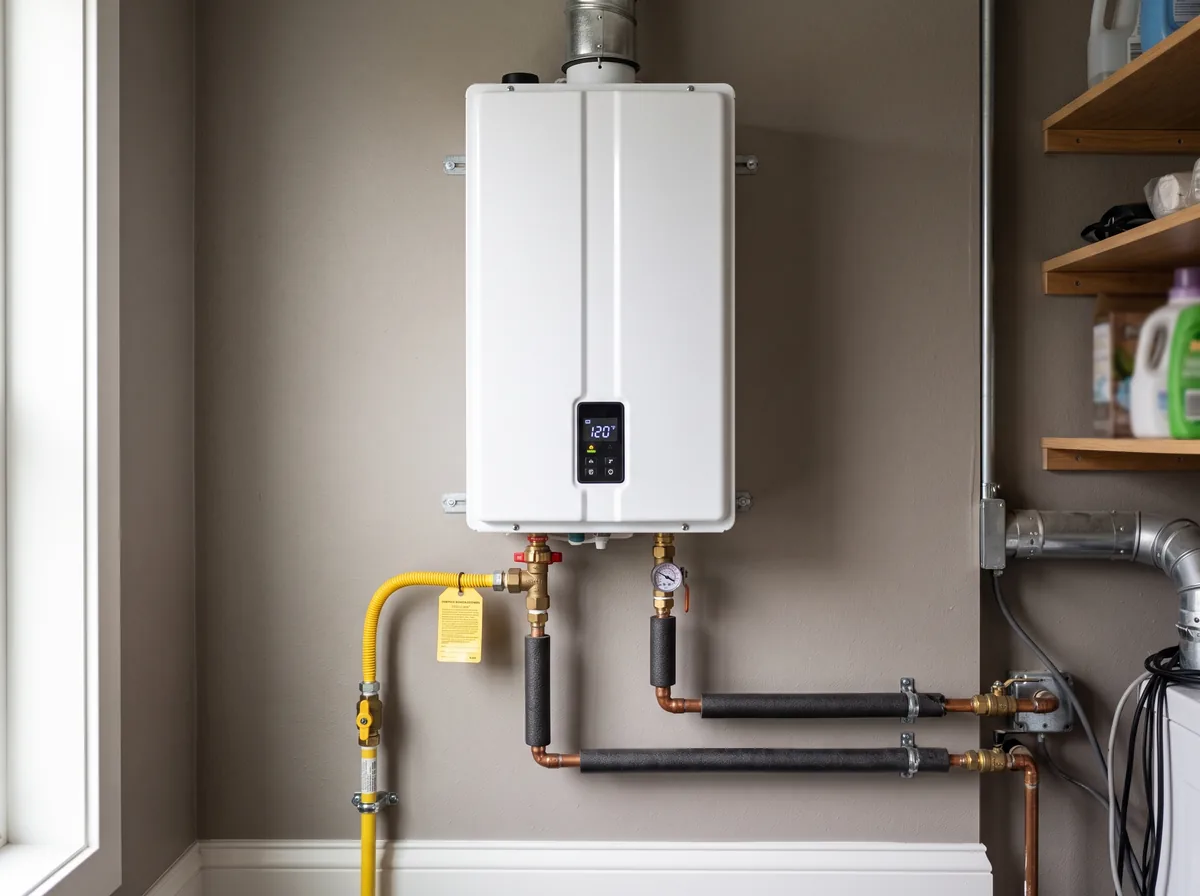
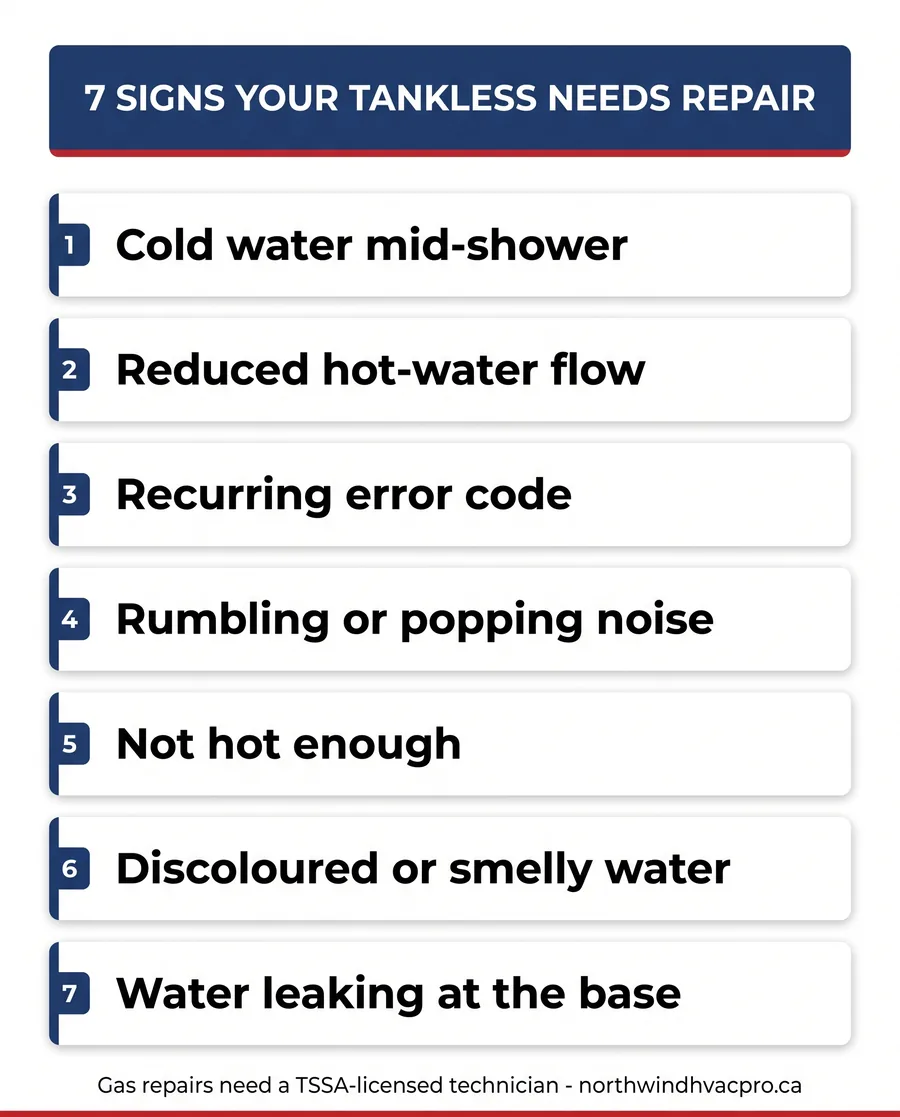
Identifying key tankless water heater repair signs helps you take quick action before minor issues turn into major failures. Common indicators include:
- Temperature Fluctuations: Water that turns cold mid-shower indicates potential issues with the flow sensor, igniter, or heat exchanger scale.
- Reduced Hot Water Pressure: Low flow suggests scale accumulation inside the heat exchanger or a clogged inlet filter.
- System Error Codes: Displays showing repeating error codes point to internal component malfunctions.
- Unusual Sounds: Rumbling, popping, or whistling noises signal mineral buildup, airflow restriction, or gas supply inconsistencies.
- Inadequate Heating: Water taking longer to heat or failing to reach set temperatures.
- Discolored or Smelly Water: Indicates internal component degradation or water quality issues requiring professional assessment.
- Visible Water Leaks: Moisture at the base of the unit points to loose fittings, pressure relief valve issues, or internal leaks.
Do Not Ignore Repeating Error Codes
A single code after a brief power outage can be cleared, but recurring codes indicate active component failure. Continually resetting the system hides underlying issues and can lead to permanent damage. Note down the error code for your technician.
What the error codes are telling you
Specific error codes vary across brands like Rinnai, Navien, and Noritz. Always check your system manual for exact details. The table below outlines general symptom patterns and whether they require DIY checks or professional service.
| Symptom or Code Type | Potential Cause | Service Level |
|---|---|---|
| No ignition / No hot water | Gas supply failure, igniter defect, or flame-sensor fault | Professional Repair (Gas side) |
| Temperature fluctuations | Flow sensor issue, scale buildup, or ignition instability | Professional Repair |
| Reduced water pressure | Scale accumulation or clogged cold-water inlet screen | Filter check (DIY) / Descaling (Professional) |
| Scale or maintenance code | Heat exchanger requires flushing | Professional Service |
| Venting / Air supply code | Blocked intake or exhaust ducting | Professional Repair |
| Active water leak | Failed plumbing fitting, valve, or heat exchanger leak | Professional Repair |
What you can safely check versus what needs a pro
Safe Homeowner Checks:
- Locate the error code on your unit display and cross-reference it with your owner’s manual.
- Verify electrical power to the unit and confirm the gas shut-off valve is open.
- Inspect and clean the cold-water inlet filter screen according to manufacturer instructions.
- Ensure outdoor intake and exhaust vent pipes are clear of debris, snow, or nests.
- Perform a single system power reset after an unexpected error code.
Tasks Requiring a Licensed Technician:
- Ignition system, gas valve, flame sensor, or burner adjustments.
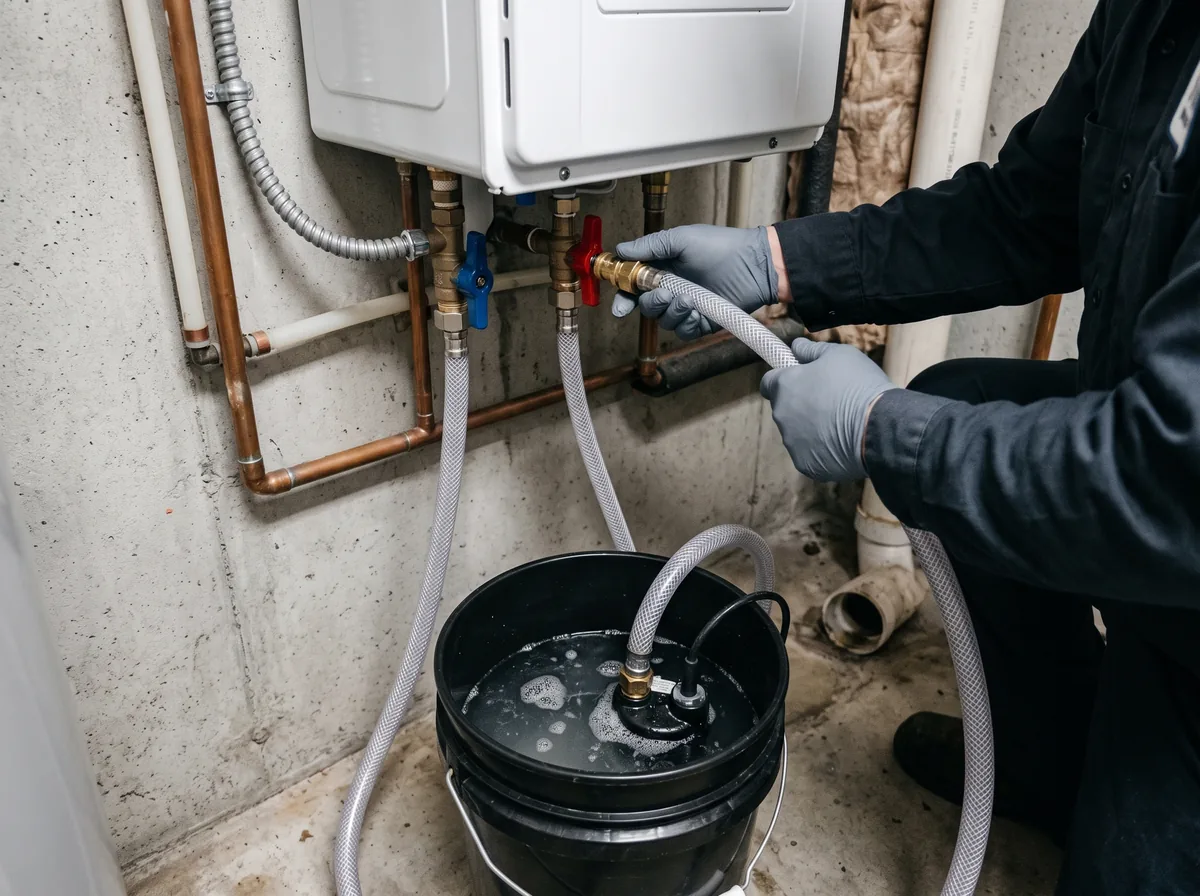
- Chemical descaling and flushing of the heat exchanger.
- Venting installation repairs, internal plumbing leaks, or recurring system error codes.
Ontario Gas Regulations
Gas-fired tankless water heater repairs in Ontario must be performed by a technician holding a valid TSSA G1 or G2 license. You can verify licensed contractors through the Technical Standards and Safety Authority (TSSA). If replacing your unit, choosing an ENERGY STAR certified model ensures energy efficiency. Never attempt gas line or combustion system repairs yourself.
Repair or replace? Cost expectations in the GTA
Deciding between repair and replacement depends on the unit’s age and the specific component failure. Descaling or replacing a sensor on a unit under 10 years old is usually cost-effective. However, a cracked heat exchanger on an older unit may warrant a complete replacement. Below are typical cost ranges in the Greater Toronto Area (GTA):
| Repair Type | Typical GTA Cost Range | Repair Viability |
|---|---|---|
| Descaling / System Flush | $150 – $350 | Highly Recommended (Routine Maintenance) |
| Flow Sensor or Thermistor Replacement | $200 – $450 | Recommended |
| Igniter or Flame Sensor Service | $250 – $500 | Recommended |
| Venting or Gas Line Service | $250 – $600+ | Recommended |
| Heat Exchanger Replacement | $600 – $1,500+ | Recommended only if unit is under warranty/newer |
Preventative Maintenance
An annual descaling service prevents heat exchanger degradation, preserves unit efficiency, and avoids costly major repairs caused by hard water scale buildup.
Gas safety and venting: when to stop
Gas-fired tankless systems require precise fuel combustion and proper venting. If you suspect a gas leak or venting obstruction, treat it as an emergency rather than a standard maintenance issue.
Gas Leaks & Carbon Monoxide Precautions
If you smell gas or suspect carbon monoxide buildup, evacuate the building immediately. Do not operate light switches, electronics, or phones indoors. From a safe location, call Enbridge Gas at 1-866-763-5427 or call 911 emergency services. Ensure your home has working CO detectors near gas appliances as required by Ontario safety codes.
Download the Free Quick Guide
A one-page reference checklist outlining clear tankless water heater repair signs, safe DIY checks, and when to call a professional.
Frequently Asked Questions
Noticing warning signs with your system? NorthWind HVAC provides TSSA-licensed tankless water heater repairs, descaling, and maintenance across Mississauga, Brampton, Toronto, and the GTA. Book a licensed technician today.

Written by
Oleksii Sitalo
Oleksii Sitalo is an HVAC professional with hands-on experience in heating, cooling, air conditioning, furnace systems, and home comfort solutions.
