 Proudly Canadian


 Home
Home Cooling
 Heating
 Heat Pumps
 Air Quality
 Other
Other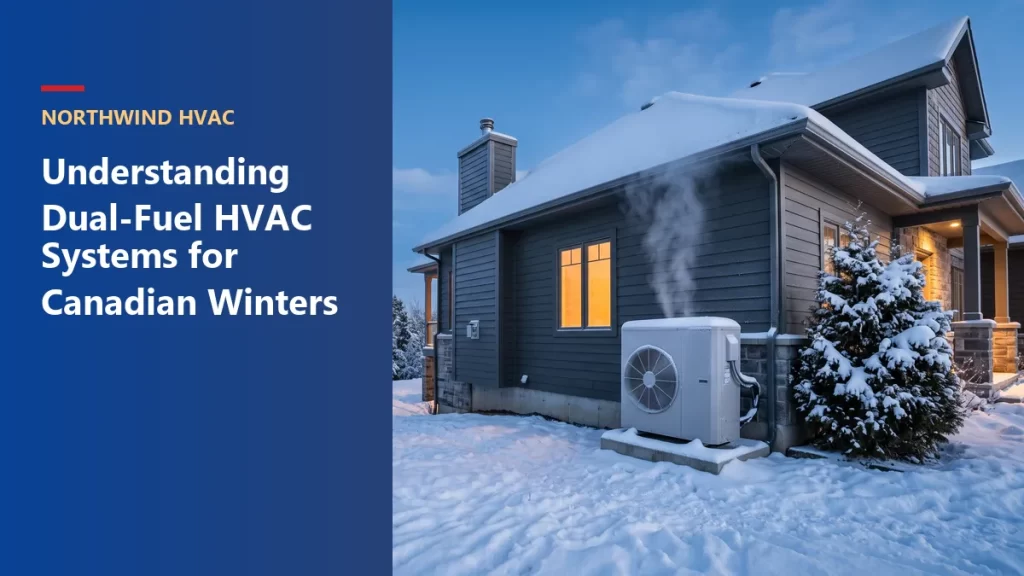
A dual-fuel HVAC system pairs a professional heat pump installation with a gas furnace and switches between them automatically. It runs the heat pump for most of the heating season and hands off to gas only when the outdoor temperature drops low enough that gas becomes more efficient. For many homeowners considering a dual-fuel HVAC system in Canada, winter weather often raises concerns about relying solely on electric heat during extreme cold snaps.
Below, we explain how the switchover works, what changes regarding installation and licensing when adding a second fuel source, and how to determine whether a dual-fuel setup or a single system makes the most sense for your home.
In this article
What a Dual-Fuel System Actually Is
A dual-fuel system, sometimes called a hybrid heating system, combines two complete heating sources sharing one set of ductwork and one control board. A heat pump handles both heating and cooling for most of the year. A gas furnace sits alongside it as a backup, operating only when needed. When installing a dual-fuel HVAC system, Canadian homeowners gain the benefit of automated control, as the thermostat switches between heat sources without requiring manual adjustments.
The two units do not run at the same time. Rather than blending heat sources, the system completes a distinct handoff: the thermostat and an outdoor sensor select the optimal source based on your pre-set switchover temperature.
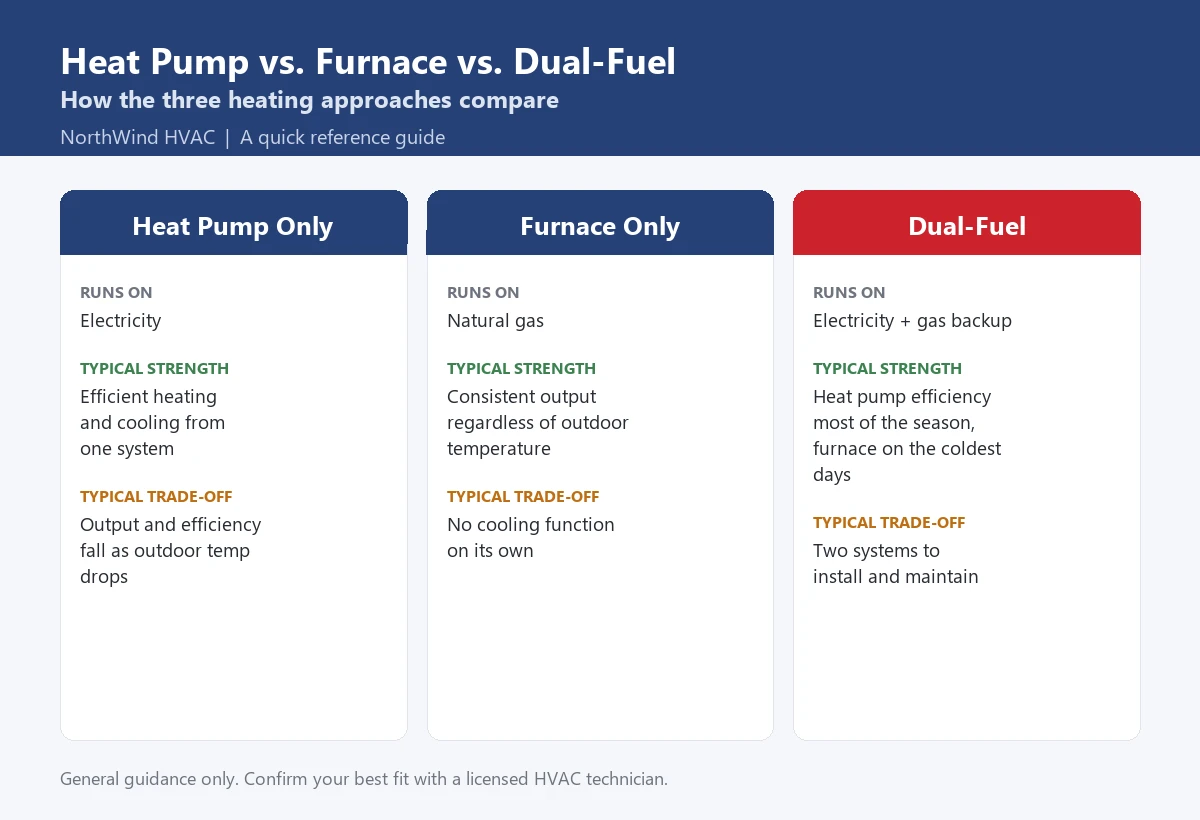
Heat Pump vs. Furnace vs. Dual-Fuel
| System | Runs on | Typical strength | Typical trade-off |
|---|---|---|---|
| Heat pump only | Electricity | Efficient heating and cooling from one system | Output and efficiency decrease as outdoor temperatures drop significantly |
| Furnace only | Natural gas | Consistent heat output regardless of outdoor temperature | No cooling function on its own; relies on gas year-round for heating |
| Dual-fuel | Electricity, with gas backup | Heat pump efficiency for most of the season, furnace reliability on the coldest days | Requires maintaining two heat sources instead of one |
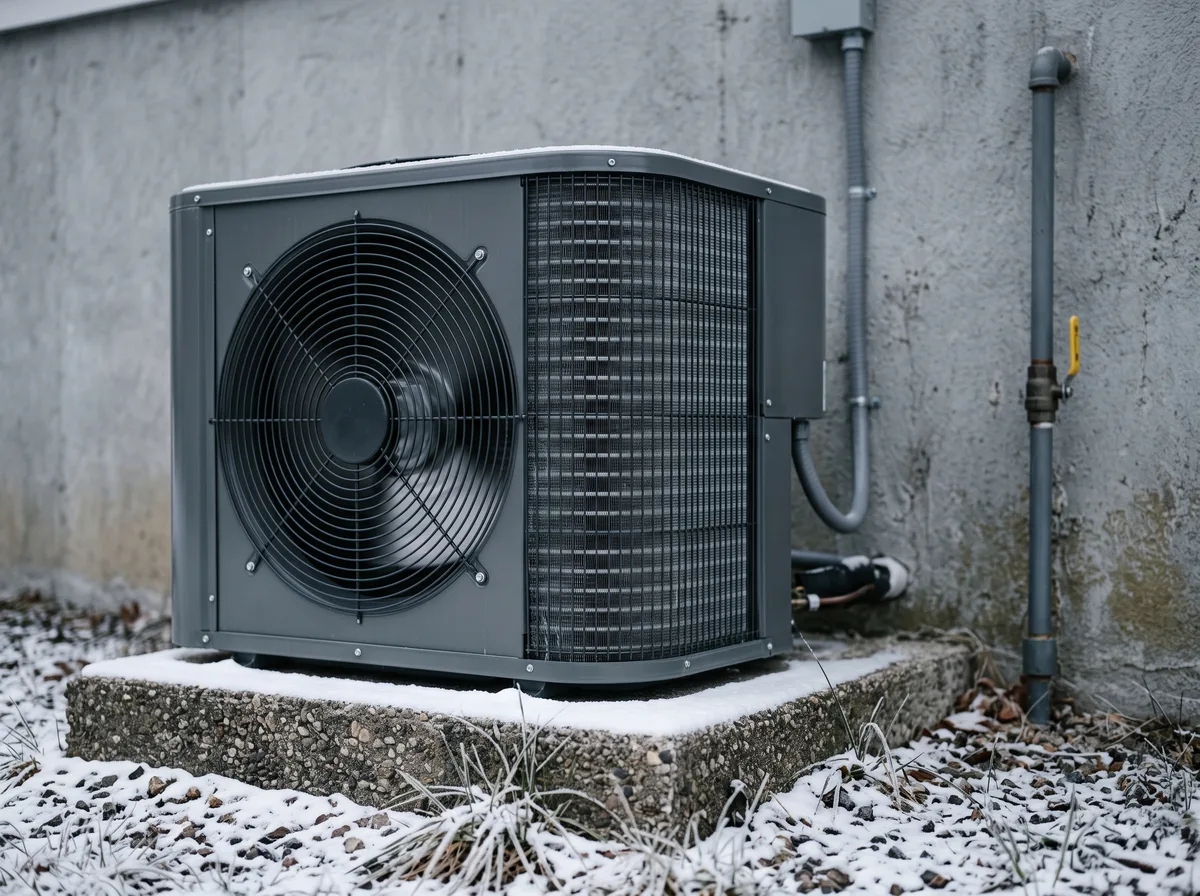
Did you know? Cold-climate heat pumps have improved significantly in recent years. Some models maintain effective operation well below freezing before requiring furnace assistance. Read our guide on the pros and cons of heat pumps for a deeper look at cold-climate performance.
How the Switchover Point Works
The switchover point is a specific outdoor temperature configured by your technician during installation. Above this set temperature, the thermostat calls for the heat pump. Below it, heating transitions to the gas furnace. Setting this threshold too high can lead to burning gas on mild days when the heat pump could easily handle the load. Setting it too low causes the heat pump to overwork during severe cold snaps.
Determining the ideal switchover point depends on your heat pump’s performance rating, local utility costs, and home ductwork capacity. A professional HVAC technician will calculate these factors to ensure your system balances energy savings and indoor comfort.
Pro tip: Review your thermostat run history partway through your first winter. Tracking furnace engagement frequency helps you determine if the switchover point requires fine-tuning for your home’s insulation profile.
Why Canadian Winters Make the Case for Dual-Fuel
Modern cold-climate heat pumps perform well across a wide temperature range. However, when evaluating a dual-fuel HVAC system, Canadian climate conditions remain a primary consideration. A hybrid setup provides an essential backstop during intense winter cold snaps without forcing a single piece of equipment to manage extreme temperature swings alone.
This added reliability is especially beneficial for regions experiencing lower overnight winter temperatures or homes with legacy ductwork designed for high-temperature furnace airflow.
Installation and Licensing Considerations
Installing a dual-fuel system involves two distinct trade disciplines. The heat pump’s electrical connections must comply with provincial electrical safety codes, while the gas furnace’s supply line and venting must strictly follow gas trade safety standards. Both components require proper permits and professional sign-off.
Ontario Licensing Requirements
Gas furnace installations in Ontario must be completed by a technician certified by the Technical Standards and Safety Authority (TSSA). Electrical connections for the heat pump require an ESA-permitted electrician. Additionally, new equipment installations typically require a municipal building permit; see Toronto’s building and construction services as an example of standard municipal permit procedures.
North Wind HVAC does not recommend DIY work on gas appliances or electrical connections. Always verify permit and licensing requirements with your local municipality prior to installation.

Rebates and Incentives
Federal and provincial energy programs periodically offer financial incentives for qualifying heat pump upgrades. Eligibility requirements and qualifying configurations change over time. Check Natural Resources Canada’s home energy efficiency programs directly to confirm active offerings. You can also review our heat pump rebates guide for an overview of current local incentives.
Upfront Costs: Installing two complete heat sources generally involves higher initial equipment costs than installing a single system. Long-term ROI depends on local utility rates, overall system efficiency, and home heating demand during peak winter months.
Planning Tip: Ask your installer to provide written documentation detailing the proposed switchover temperature and the reasoning behind it before installation day. A custom setting tailored to your ductwork delivers better performance than default factory settings.
Download: Dual-Fuel Heating Decision Guide
Download the PDF guideIs a Dual-Fuel System Right for Your Home?
Opting for a dual-fuel HVAC system in Canada is ideal if you want heat pump efficiency throughout the shoulder seasons while retaining gas heating reliability during severe winter cold snaps. If your property already features a functional gas furnace, integrating a compatible heat pump can often be straightforward.
Conversely, if your primary goal is lower initial capital costs, a standalone heat pump or single gas furnace may better align with your budget. The right solution ultimately depends on your home’s duct design, insulation levels, and heating requirements.
Frequently Asked Questions
Do I need a full duct replacement to add a heat pump to my existing furnace? +
Not always. Many homes can pair a heat pump with existing ductwork if properly sized. An HVAC professional must evaluate your ductwork prior to installation.
Can I install a dual-fuel system myself if I already have both a furnace and a heat pump? +
No. Configuring automatic switchover requires specialized control wiring and precise switchover point configuration, which must be performed by licensed professionals.
Does a dual-fuel system still cool my home in summer? +
Yes. The heat pump operates in cooling mode during summer months, functioning identically to a standard air conditioner or heat pump system. The furnace remains inactive during cooling mode.
How is the switchover point decided? +
A certified technician calculates the switchover point based on equipment ratings, ductwork capacity, and local utility rates. Settings can be adjusted after monitoring system performance over a season.
Are there rebates specifically for dual-fuel systems? +
Rebate availability varies by jurisdiction, postal code, and equipment ratings. Review Natural Resources Canada’s current programs for active incentives.
Keep reading
North Wind HVAC installs dual-fuel and hybrid heating solutions across dual-fuel HVAC installation in Brampton, hybrid heating solutions in Mississauga, and heat pump services in Barrie, as well as Vaughan, Richmond Hill, Aurora, and the Greater Toronto Area. If you are choosing between a standalone heat pump and a dual-fuel HVAC system, Canadian homeowners can request a free estimate today to review customized options for their home.

Written by
Oleksii Sitalo
Oleksii Sitalo is an HVAC professional with hands-on experience in heating, cooling, air conditioning, furnace systems, and home comfort solutions.
