 Proudly Canadian


 Home
Home Cooling
 Heating
 Heat Pumps
 Air Quality
 Other
Other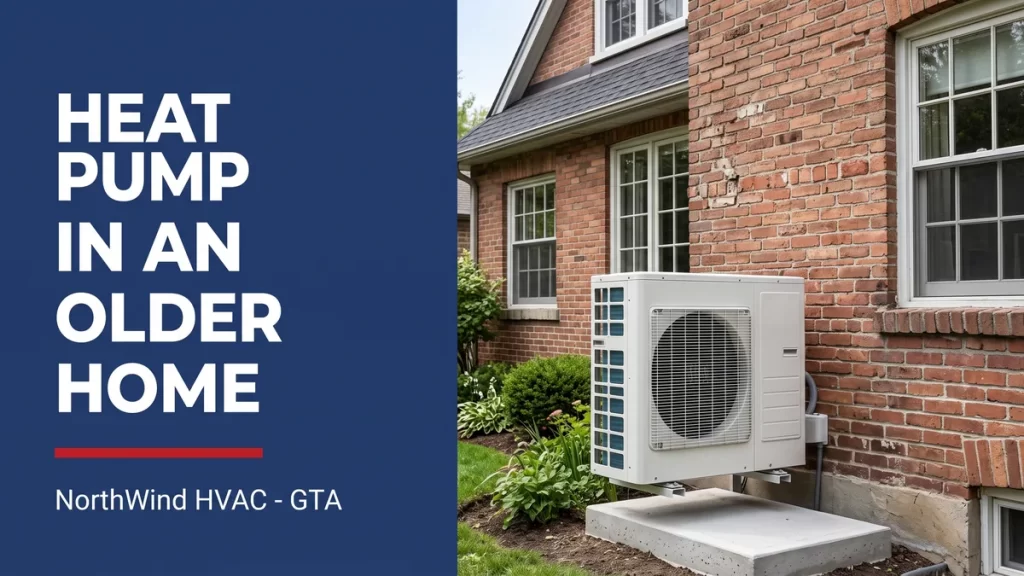
Yes, installing a heat pump in older home properties is entirely possible, and plenty of century-old brick houses across the GTA are running one right now. The honest answer is: usually, with a few checks first. An older Toronto home was built for a gas furnace, not a heat pump, so before you book professional heat pump installation it pays to know what your ducts, your electrical panel, and your insulation are actually working with.
This guide walks through a heat pump retrofit the way a technician sizes it up on a first visit. We look at duct condition, the ductless option when ducts are poor, panel capacity, why insulation comes before equipment, how cold-climate units hold up in a Toronto January, the hybrid setup that keeps your furnace as backup, and where rebates fit. None of it is a dealbreaker on its own. It is just a checklist.
In this article
What to check before a heat pump retrofit
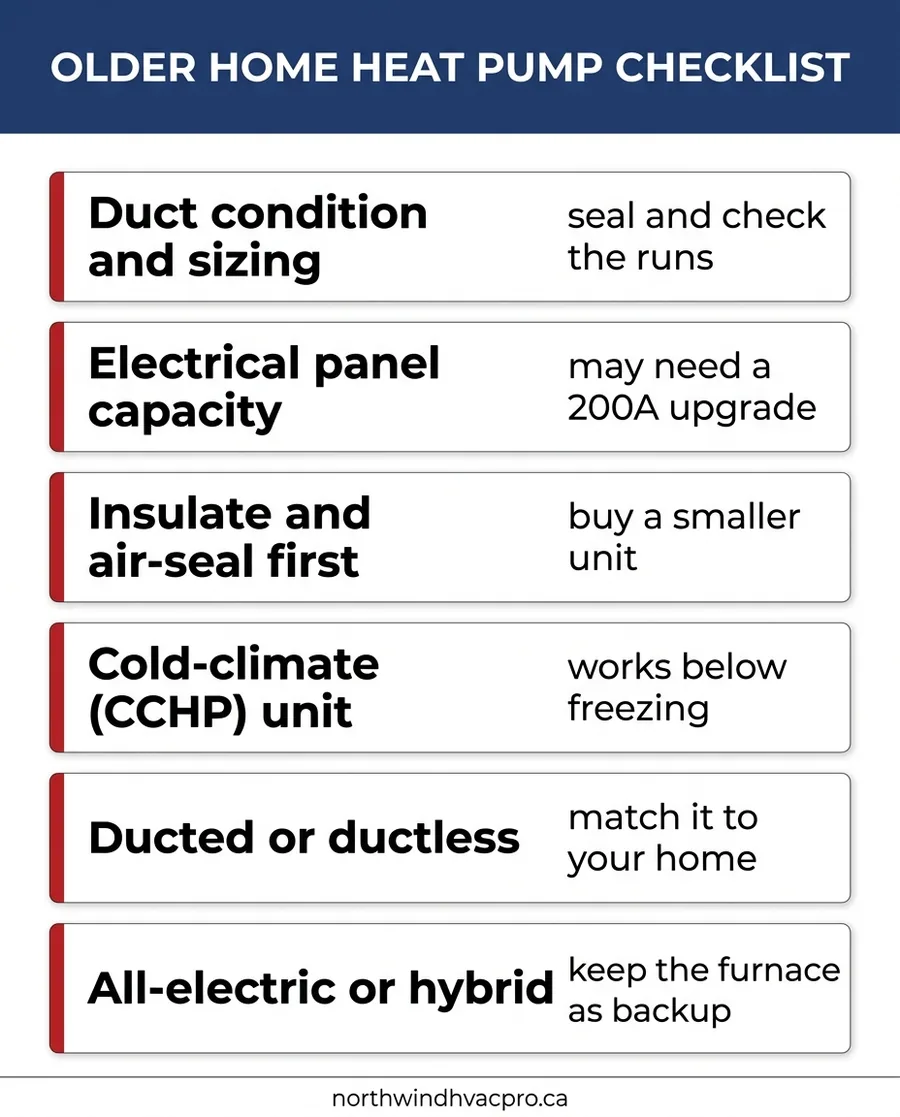
When planning to install a heat pump in older home retrofits, every property is a little different, but the assessment follows the same order. Work through these five points and you will know whether a straight swap, a ductless system, or a hybrid setup is the right call:
- Assess the ductwork. Confirm the existing ducts are sealed, correctly sized, and can move the higher air volume a heat pump needs.
- Check the electrical panel. A 100-amp service may require an upgrade, but the answer depends on an electrical load calculation that includes the heat pump, any auxiliary resistance heat, and the home’s other electrical loads. Do not specify a 200-amp upgrade until a Licensed Electrical Contractor completes that calculation.The hybrid option: keep your furnace as backup” and “Should I keep my furnace as backup
- Air seal and insulate first. Fix the leaks and thin insulation before you size the unit, so you can buy a smaller, cheaper system.
- Pick ducted or ductless. Good ducts mean a central unit; poor or missing ducts point to a ductless mini-split.
- Decide all-electric or hybrid. Go fully electric, or keep the gas furnace as a backup for the coldest nights.
People often ask: does a heat pump replace both my furnace and my AC?
A heat pump moves heat instead of burning fuel, so it does both jobs: it heats in winter and cools in summer, replacing your air conditioner too. In an older home that still has a working furnace, most people are surprised they can keep that furnace and simply add the heat pump alongside it. You do not have to rip everything out at once.
Start with the ductwork, or go ductless
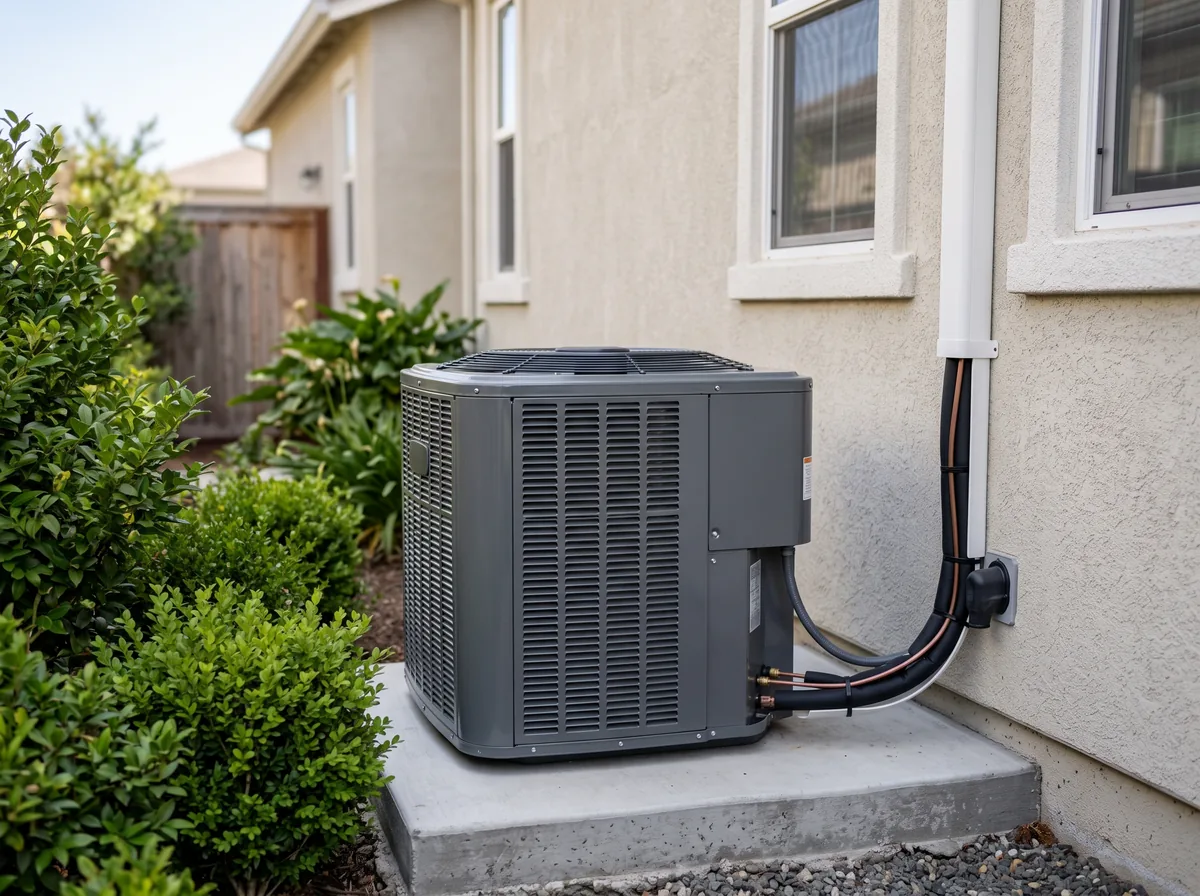
Ducts are the first thing that decides your path. A heat pump moves a larger volume of cooler air than a furnace does, so undersized, leaky, or poorly laid-out ducts, common in homes built before the 1980s, can leave rooms uneven and the system straining. A technician will check duct sizing, look for disconnected runs in the basement and attic, and seal the leaks. Many older Toronto homes only need duct sealing and a couple of modifications, not a full replacement.
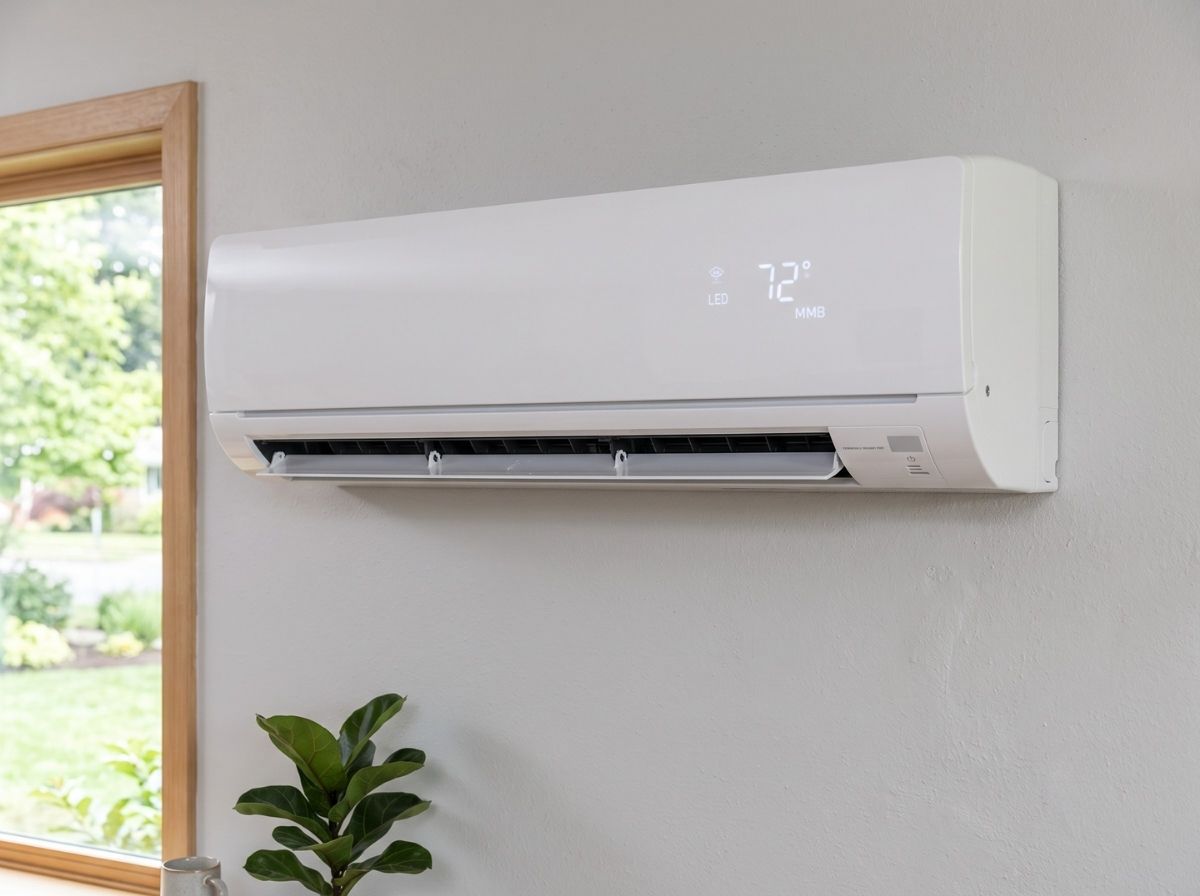
When the ducts are in rough shape, missing entirely, or the house was heated by boilers and radiators, a ductless mini-split system is usually the smarter retrofit. Wall-mounted heads run refrigerant lines back to an outdoor unit, so you skip ductwork altogether and get room-by-room temperature control. It is also the cleanest way to add heating and cooling to a finished attic, an addition, or a converted garage where no ducts ever reached.
Check your electrical panel capacity
This is the step that catches most homeowners off guard. A heat pump runs on electricity, and many older Toronto homes still have a 100-amp electrical service that is already close to full with the stove, dryer, and central air. A 100-amp service may require an upgrade, but the answer depends on an electrical load calculation that includes the heat pump, any auxiliary resistance heat, and the home’s other electrical loads. Do not specify a 200-amp upgrade until a Licensed Electrical Contractor completes that calculation. In Ontario, hired panel-upgrade work must be performed by a Licensed Electrical Contractor (LEC). The contractor files an ESA notification of work and arranges the required inspection.
Not every older home needs the upgrade. Some already have 200-amp service, and some cold-climate units and ductless systems draw little enough that a load calculation shows the existing panel can handle it. That calculation, done by the electrician and your HVAC contractor together, is what tells you for sure. Budget for the possibility of a panel upgrade when you plan, and treat it as a pleasant surprise if you do not need one.
Air seal and insulate before you size the unit
The most common mistake when installing a heat pump in older home environments is sizing the heat pump to the house as it is today, leaks and all. Fix the envelope first. Air sealing the attic hatch, rim joists, and old window frames, then topping up attic insulation, lowers how much heat the house loses on a cold night. A tighter house needs a smaller heat pump, and a smaller unit costs less to buy, less to run, and is easier to fit on an older electrical panel.
Think of it as buying the cheapest kilowatt first. Every draft you seal is load you do not have to pay a heat pump to replace for the next fifteen years. A blower-door test or a simple energy assessment will point out where an older Toronto home is bleeding heat, and much of that work is inexpensive weekend labour compared to the equipment.
Cold climate heat pumps and Toronto winters
The old worry that heat pumps quit when it gets cold is out of date. Modern cold-climate heat pumps, sometimes labelled CCHP, use variable-speed compressors that keep pulling usable heat from the outdoor air well below freezing, down into the range of a hard Toronto cold snap. For the large majority of the heating season across the GTA, a properly sized cold-climate unit carries the house on its own.
Independent, non-commercial guidance on how these systems perform and what efficiency ratings to look for is worth reading before you buy. Natural Resources Canada publishes plain-language home heating and heat pump information for Canadian climates. On the maintenance side, a cold-climate unit still needs a yearly check, and keeping up with heat pump repair and service is what protects that winter performance. Because the same unit also cools in summer, many homeowners weigh it against a separate air conditioning installation and find the heat pump does both jobs.
The hybrid option: keep your furnace as backup
If your gas furnace still has years left, you do not have to scrap it. A dual-fuel or hybrid setup pairs a heat pump with your existing furnace. The heat pump handles heating efficiently through most of the season, and on the coldest nights the system automatically switches to the gas furnace for a quick, powerful boost. A hybrid system may reduce operating costs, but the result depends on electricity and gas prices, the heat pump’s coefficient of performance at each outdoor temperature, and the control’s economic switchover point.
A hybrid setup is often the easiest sell for a heat pump in older home layouts, because it leans on equipment that is already there and can soften the panel-capacity question, since the furnace, not the heat pump, covers the peak cold load. Keeping the furnace in the mix also means you already have a plan when it eventually needs furnace repair down the road. NorthWind HVAC installs and services heat pumps across Toronto, Vaughan, and the wider GTA, ducted, ductless, or hybrid.
Heat pump in older home costs and rebates
Cost depends on which path your home points you toward. A ductless retrofit for a couple of rooms sits at the low end; a whole-home cold-climate system with a panel upgrade sits at the top. Rebate and financing programs for heat pumps in Ontario change often, so check what is actually open before you count on it. We keep a current rundown in our guide to heat pump rebates in Ontario, and always confirm a program is still accepting applications before you build it into the numbers. Here is a rough sense of GTA pricing in 2026:
| Project | Typical GTA range (2026) |
|---|---|
| Ductless mini-split (1-2 zones) | $4,500 to $12,000 |
| Central cold-climate heat pump | $9,000 to $20,000 |
| Dual-fuel / hybrid add-on with existing furnace | $7,000 to $16,000 |
| Electrical panel upgrade to 200A | $2,000 to $4,500 |
Download the free quick guide
Save this as a PDF and keep it handy.
Older Home Heat Pump Checklist – Free PDFWhat to do next
- Book an in-home assessment. Have a contractor check duct condition, run an electrical load calculation, and measure the home so the heat pump is sized to the house, not guessed.
- Seal and insulate first. Tackle the cheap envelope fixes before the equipment is ordered, so you can buy a smaller, less expensive system.
- Decide ducted, ductless, or hybrid. Match the system to what your ducts, panel, and furnace can support, and confirm any rebate is still open before you rely on it.
Frequently asked questions
Wondering whether your older Toronto home is a good fit for a heat pump? NorthWind HVAC will assess your ducts, panel, and insulation, size the system properly, and lay out ducted, ductless, and hybrid options with honest numbers. Book a free estimate or get in touch with our team and we will tell you straight whether a retrofit makes sense for your home.

Written by
Oleksii Sitalo
Oleksii Sitalo is an HVAC professional with hands-on experience in heating, cooling, air conditioning, furnace systems, and home comfort solutions.
