 Proudly Canadian


 Home
Home Cooling
 Heating
 Heat Pumps
 Air Quality
 Other
Other
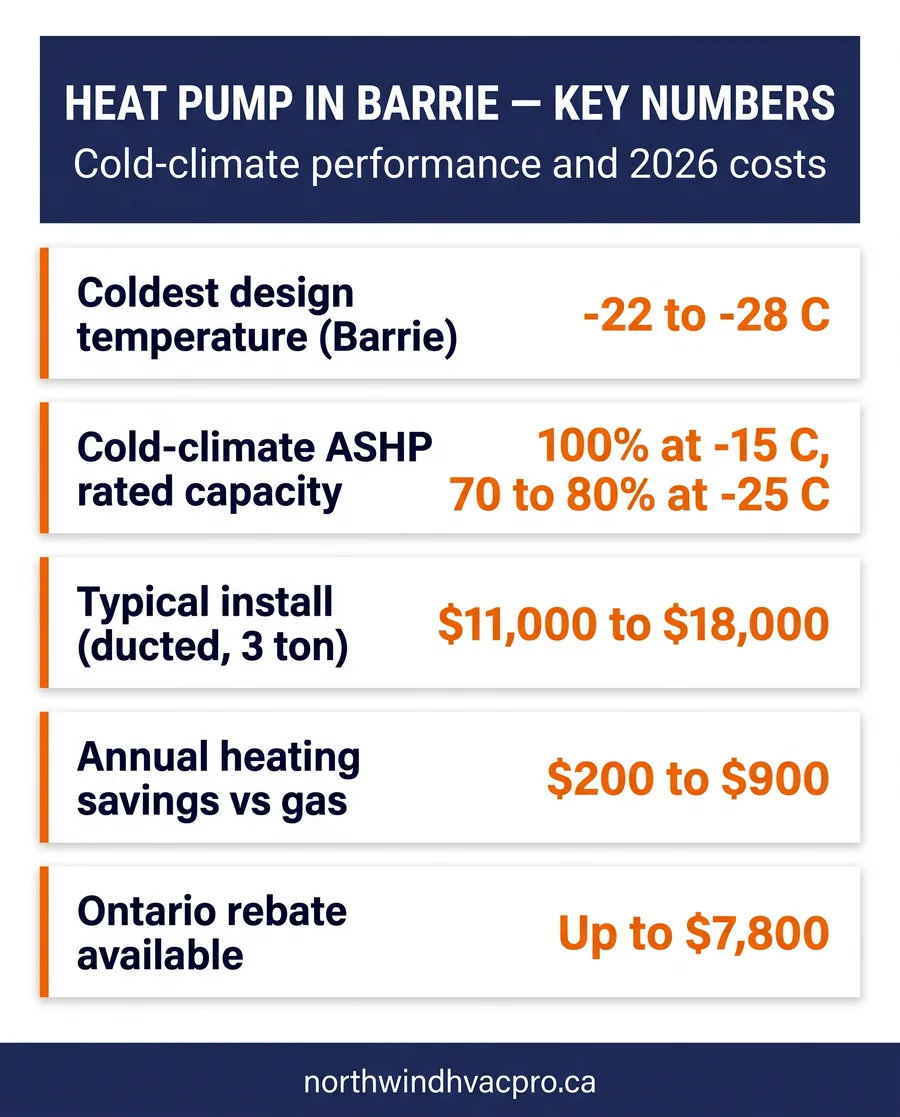
Switching to a heat pump in Barrie works, but only if you size it for our actual winter, not Toronto’s. Cold-climate air-source heat pumps now hold their rated heating capacity down to about -15 C and still deliver 70 to 80 percent of capacity at -25 C. That covers most Barrie winter days. The catch is the design temperature, the ductwork, and the backup plan. Get those three right and you can cut $200 to $900 a year off heating costs while replacing both your furnace and AC with one box. Get them wrong and you’ll be cold in February. Our heat pump installation services in Barrie handle the sizing math so you don’t have to guess.
The decision isn’t whether heat pumps work this far north. They do. The decision is which type, what backup, and what the total install costs after rebates. This guide walks through how Barrie homeowners are actually deciding right now, where the rebate money is, and the questions that separate a quote you can trust from one you can’t.
In this article
Why heat pumps work in Barrie
A heat pump is just an air conditioner that runs in both directions. In summer it pulls heat out of your home. In winter it pulls heat out of the outdoor air and moves it inside. Yes, even when that outdoor air is well below zero. There’s still useful heat energy in -20 C air. The heat pump’s job is concentrating it.
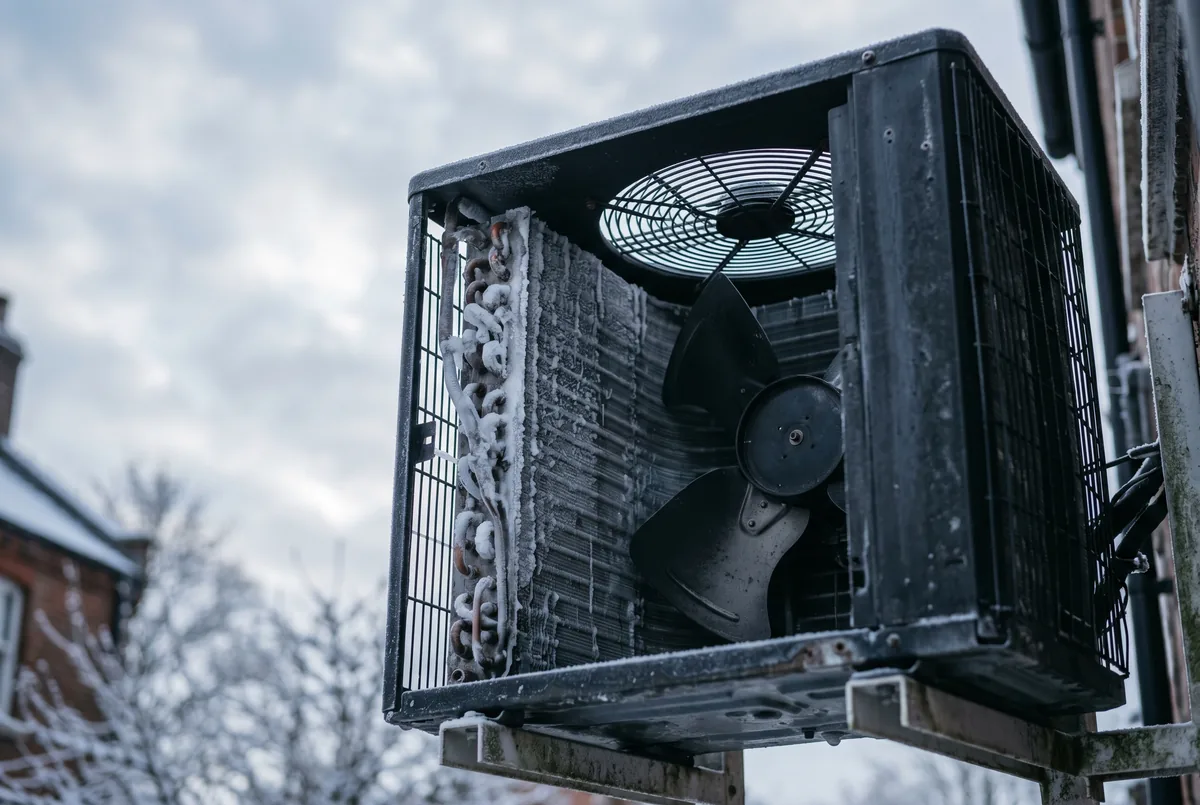
Older heat pumps lost their grip around -8 C and needed expensive electric resistance backup to keep up. Cold-climate air-source heat pumps from the last five model years are different machines. They use variable-speed compressors and enhanced vapour injection to maintain capacity in temperatures that used to be a hard floor. The ENERGY STAR Canada cold-climate certification is the easy filter: if a unit carries that mark, it’s been tested for our winter, not Atlanta’s.
Did you know?
Barrie averages roughly 4,500 heating degree days per year, which puts it firmly in NRCan’s “very cold” climate zone. Toronto sits closer to 4,000. That 12 percent gap matters when you’re sizing a heat pump. A unit sized for Toronto winters will short-cycle and burn out in Barrie within a few seasons.
The three heat pump types worth considering
For Barrie homes, three configurations make sense. Each has a clear use case, and choosing the wrong one is the most common reason heat pump retrofits disappoint.
Ducted central heat pump (replaces both furnace and AC)
This is the standard whole-home solution if your home already has central ductwork. The outdoor unit looks like a slightly larger central AC condenser. The indoor coil sits where your furnace coil used to be, and the air handler replaces the furnace. You get heating and cooling from one system. This is the most efficient option in pure heat-pump performance, and it qualifies for the highest rebate tier.
Dual-fuel hybrid (heat pump plus existing gas furnace)
For most Barrie homes I’d recommend looking at this first. The heat pump handles 80 to 90 percent of the heating season at high efficiency. When the temperature drops below the system’s economic balance point (usually around -8 to -12 C in our climate), a smart thermostat hands off to the existing gas furnace. You keep the gas line as insurance, you keep AC, and the install cost stays manageable because most of the existing equipment stays put.
Ductless mini-split heat pump
If your home has no ducts (or has a finished basement, an addition, or a garage suite that the existing ducts don’t reach well), ductless mini-splits are the answer. Each indoor head heats one zone. They are excellent for adding heat to one or two spaces, but using them as the sole whole-home heating source in a typical Barrie three-bedroom is rarely cost effective. The number of heads required usually pushes the install past a properly sized ducted system.
| Configuration | Best for | Install cost (2026) | Backup needed? |
|---|---|---|---|
| Ducted central | Existing ductwork, full retrofit | $11,000 to $18,000 | Electric resistance backup |
| Dual-fuel hybrid | Already have gas furnace | $8,000 to $14,000 | Existing gas furnace |
| Ductless mini-split | No ducts, zone heating | $5,500 to $20,000+ | Depends on coverage |
Sizing for Barrie’s winter is where most installs go wrong
Heat pump sizing is not the same as furnace sizing. With a furnace, oversizing causes short cycling but the home stays warm. With a heat pump, undersizing means you’re cold in February. Oversizing means the system short-cycles in shoulder seasons and you waste capacity. Both are common mistakes, and they happen because installers are still using the rules of thumb they learned for gas furnaces.
The right answer is a Manual J load calculation that uses Barrie’s actual 99 percent design temperature, not Toronto’s. The 99 percent design temperature is the coldest air your unit needs to handle for the bulk of winter. For Barrie that’s roughly -22 C. The unit should produce your home’s full heat load at that temperature without leaning on backup.
People often ask: how do I know if a quote is properly sized?
A quote that lists only “3 ton heat pump” with no Manual J reference is not properly sized. Ask the installer to show you the room-by-room load calculation. They should be able to email you a one-page summary of the home’s design heat loss in BTU per hour and the unit’s rated capacity at -15 C. If the rated capacity at -15 C is less than the design heat loss, the heat pump will lean on backup heat for too many hours of winter and your bills will be higher than promised.
What switching to a heat pump in Barrie actually costs in 2026
Total install for a properly sized cold-climate ducted heat pump in a typical Barrie home (1,800 to 2,400 square feet) runs $11,000 to $18,000 before rebates. The spread depends on three things. The brand and tier of equipment, the condition of the existing ductwork, and whether your electrical panel can carry the load.
Dual-fuel hybrid systems are usually $3,000 to $4,000 cheaper because the existing gas furnace stays. You pay for the outdoor heat pump, a new indoor coil, and a smart hybrid thermostat. That’s it. For most Barrie homeowners with a working furnace under 12 years old, hybrid is the math that wins.
Save your money
Don’t replace a furnace that has 5+ years of life left just to add a heat pump. The hybrid configuration lets you keep that furnace as backup and capture most of the savings. When the furnace eventually fails, you can decide then whether to replace it with a smaller unit or go full electric. The flexibility itself is worth real money.
Annual heating savings versus a gas-only system run $200 to $900 in Barrie depending on home size, insulation, and how many days the heat pump runs versus the gas furnace. The savings are real but not life-changing. The bigger reason most of our customers switch is replacing two pieces of equipment with one and qualifying for the rebate, not the monthly bill.
Ontario and federal rebates available right now
Rebate programs change. As of May 2026, the federal Canada Greener Homes Grant has closed to new applicants. What’s still active for Ontario homeowners is the provincial Home Renovation Savings Program (administered through Save on Energy and the IESO). Cold-climate air-source heat pumps qualify for incentives up to several thousand dollars depending on the configuration and the home’s existing heating type.
Eligibility hinges on three things: the unit must carry an ENERGY STAR cold-climate certification, the install must be done by a participating contractor, and you typically need a pre-install energy assessment. Skipping the pre-install assessment is the most common way Barrie homeowners disqualify themselves. The Independent Electricity System Operator’s Save on Energy program portal is where the current rebate amounts and the participating contractor list live.
Always confirm the current rebate amount and eligibility rules before signing anything. Ask the installer for written confirmation that they are a participating contractor for the program you’re applying to. A printout from a year-old quote is not proof.
Older Barrie homes and the ductwork question
Heat pumps move more air than gas furnaces. A gas furnace heats air to 50 C and pushes it through small ducts. A heat pump heats air to 35 C and needs to move more of it to deliver the same comfort. Many homes built in Barrie before 1995 have ducts sized for that hotter, lower-volume air.
The honest answer for older Bayfield, Allandale, or downtown Barrie homes is that ductwork sometimes needs modification. Trunk lines may need to be enlarged, supply runs added, or returns reworked. A good installer will measure static pressure and external static pressure on your existing ducts before quoting. If they don’t and you find out after installation that the heat pump can’t move enough air, fixing it post-install is two to three times more expensive than addressing it during the original quote.
If your ductwork is the limiting factor, sometimes the right call is a hybrid system that lets the gas furnace handle the highest-demand days while the heat pump handles the rest. The lower delivery temperature limitation only bites at peak load. For 80 percent of the heating season, even older ducts move enough air for a properly sized heat pump.
Download the heat pump switching checklist
An eight-step PDF checklist of what to confirm before signing any heat pump install contract in Barrie. Save it, print it, walk through it with your installer.
NorthWind HVAC installs cold-climate heat pumps across Barrie, Innisfil, Oro-Medonte, and the wider Simcoe County area. Free in-home assessments include a Manual J load calculation and a written quote that names the exact model, the rated capacity at -15 C, and the rebate eligibility. Book a free heat pump assessment to see what your specific home actually needs.
Frequently asked questions
Sources and references
- Natural Resources Canada – ENERGY STAR Canada cold-climate heat pump program
- Independent Electricity System Operator – Save on Energy program portal for current rebate amounts
- NRCan – Energy efficiency at home, including heating and cooling guidance
- Government of Canada – Climate and weather data including heating degree day records
- City of Barrie – City of Barrie official site for permit and bylaw information
Please note: The information in this article is for general guidance only. NorthWind HVAC is not liable for outcomes from actions taken based on this content. Heat pump and gas furnace installation, refrigerant handling, and electrical work are regulated trades. In Ontario, gas appliance work requires a TSSA-licensed G1 or G2 gas technician. Electrical service upgrades require an ESA-permitted electrician. Refrigerant handling requires Environment Canada certification. Costs, regulations, and rebate programs change. Always confirm current details with the relevant authority and a licensed installer for your specific home.
The verdict on switching to a heat pump in Barrie
Cold-climate heat pumps work in Barrie when they’re sized for our actual winter and matched to your home’s ductwork. Hybrid configurations are the most defensible choice for most homes with a working gas furnace. Get the Manual J done. Confirm the rebate eligibility in writing. Then sign.

Written by
Oleksii Sitalo
Oleksii Sitalo is an HVAC professional with hands-on experience in heating, cooling, air conditioning, furnace systems, and home comfort solutions.
