 Proudly Canadian


 Home
 Cooling
 Heating
 Heat Pumps
 Air Quality
 Other
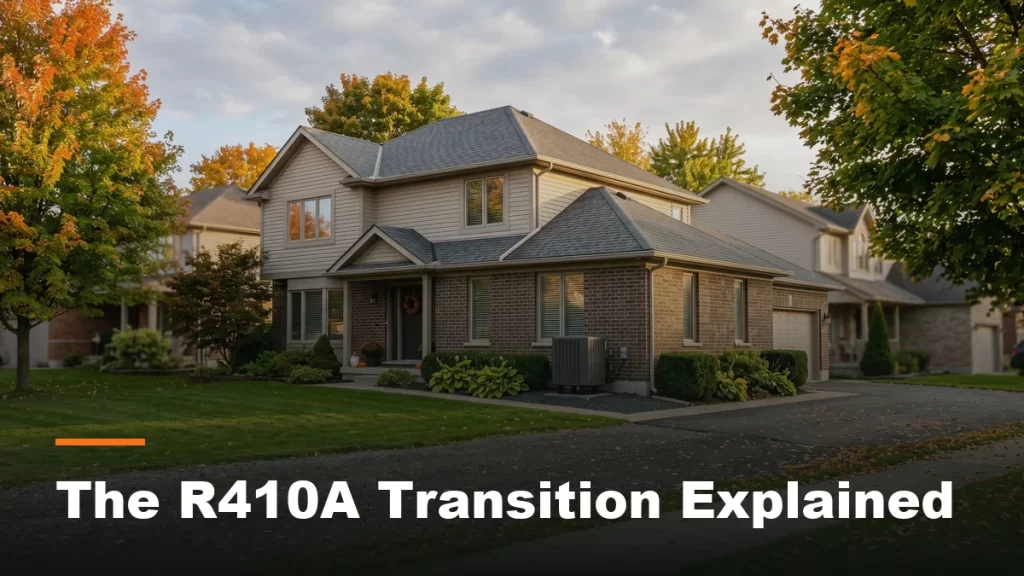
The R410A phase-down in Canada represents a gradual national supply reduction for hydrofluorocarbon (HFC) refrigerants, not an outright ban on existing home air conditioners or heat pumps. Under federal environmental regulations, Canada is phasing down bulk HFC consumption over several decades, rather than setting a hard cutoff date for your equipment. If your home cooling unit uses R410A, certified technicians can still legally service, repair, and recharge it throughout its operational lifespan.
This guide clarifies what current environmental rules actually mandate for Ontario homeowners, separating marketing rhetoric from the law so you can make informed choices about your heating and cooling equipment without feeling pressured.
Understanding R410A Phase-Down Regulations in Canada
R410A belongs to the hydrofluorocarbon (HFC) family of chemical refrigerants. Because HFCs carry a high Global Warming Potential (GWP), Canada committed to reducing overall consumption under international environmental treaties.
At the national level, Environment and Climate Change Canada (ECCC) enforces the Ozone-depleting Substances and Halocarbon Alternatives Regulations (ODSHAR). These rules establish an allowance system that gradually scales down the manufacturing and bulk importation of virgin HFCs. They do not prohibit running, repairing, or recharging installed residential air conditioners. Understanding this distinction clarifies why an operational R410A system never needs to be retired or replaced prematurely solely due to refrigerant rules.
Timeline of Canada’s HFC Phase-Down Schedule
In accordance with the Kigali Amendment to the Montreal Protocol, Canada adopted a progressive reduction schedule that caps bulk HFC consumption against a calculated historical baseline:
- 2016–2017: Canada formally ratified the Kigali Amendment to the Montreal Protocol, committing to legally binding long-term HFC reduction targets.
- January 1, 2019: Canada’s HFC phase-down began with an initial 10% reduction in bulk consumption from the baseline.
- January 1, 2024: National HFC consumption limits tightened to a 40% reduction below the baseline.
- January 1, 2029: The next reduction milestone takes effect, requiring a 70% reduction in total consumption.
- January 1, 2036: Canada reaches its final target under the agreement, achieving an 85% reduction from baseline levels.
Phase-Down vs. Phase-Out
A phase-down steadily limits new bulk supply while allowing a 15% plateau for ongoing servicing needs, reclaimed refrigerant, and critical applications. It does not set an expiration date on owning or repairing an existing R410A unit.
What the Phase-Down Means for Current R410A Systems
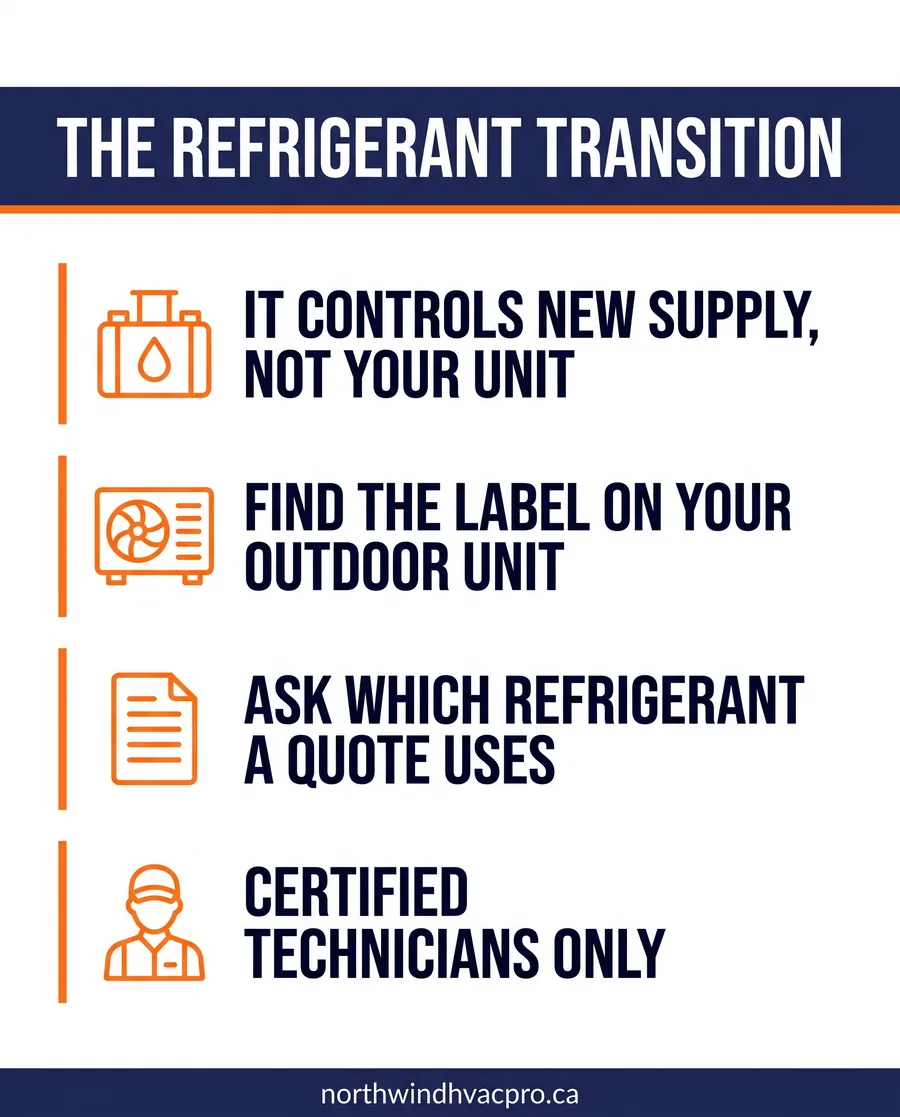
If your home currently relies on an R410A air conditioner or heat pump, there is no requirement to replace it. Federal controls restrict bulk importing quotas, not homeowner equipment. Certified technicians will continue to have access to R410A—including virgin allotments and recovered, reclaimed supply, to service and recharge existing systems for the remainder of their service life.
If your cooling unit is underperforming, the issue is almost certainly due to regular wear, electrical failure, or a physical leak, rather than chemical availability. Reading our guide on how long an AC lasts in Ontario can help you decide whether a standard repair or an equipment upgrade makes the most sense based on the age of your system.
Consumer Protection Tip
If a sales representative claims that Canadian law requires you to replace a functioning R410A system immediately, ask them to produce the specific regulation in writing. No such requirement exists for residential homeowners.
What Changes When Purchasing a New HVAC System
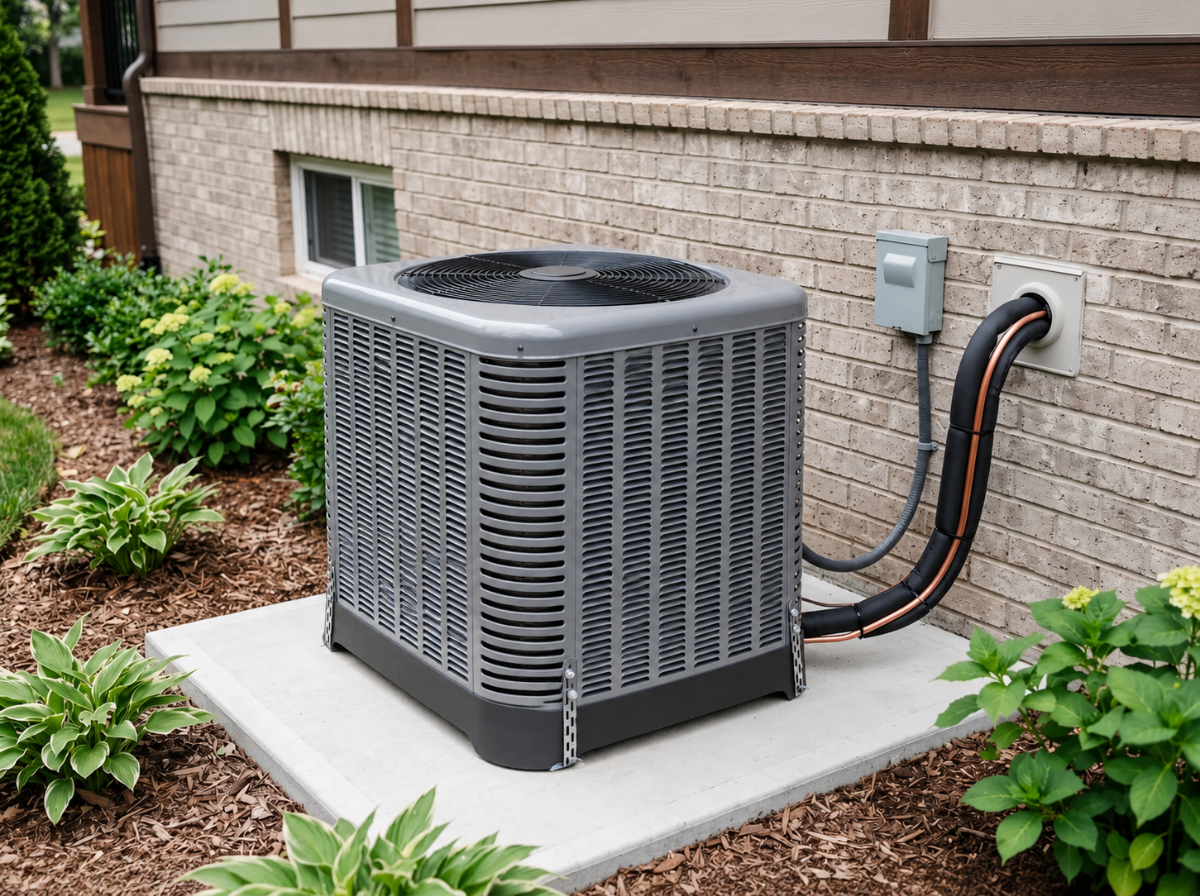
The transition primarily influences the models available when you replace older equipment. HVAC manufacturers have redesigned residential systems around next-generation, lower-GWP refrigerants such as R454B and R32.
These newer compounds carry an ASHRAE safety classification of A2L (lower toxicity, mild flammability). Because of this mild flammability classification, equipment design and installation practices follow updated safety guidelines, including factory leak-detection sensors and ventilation standards. Choosing licensed installers who are trained in handling A2L systems ensures your new cooling installation meets all safety and manufacturer requirements.
The short video below provides an industry overview of A2L refrigerant properties and standard handling practices:
When reviewing installation estimates, ask your HVAC technician which refrigerant the proposed unit utilizes. If you are also considering a heat pump upgrade, reviewing our comparison of heat pumps vs. air conditioners will help you align overall energy efficiency with modern refrigerant standards.
Critical Safety Rule
Never allow different refrigerants to be mixed. Residential systems are engineered, valved, and rated strictly for the specific refrigerant listed on the outdoor unit’s data plate.
Existing Systems vs. New Systems at a Glance
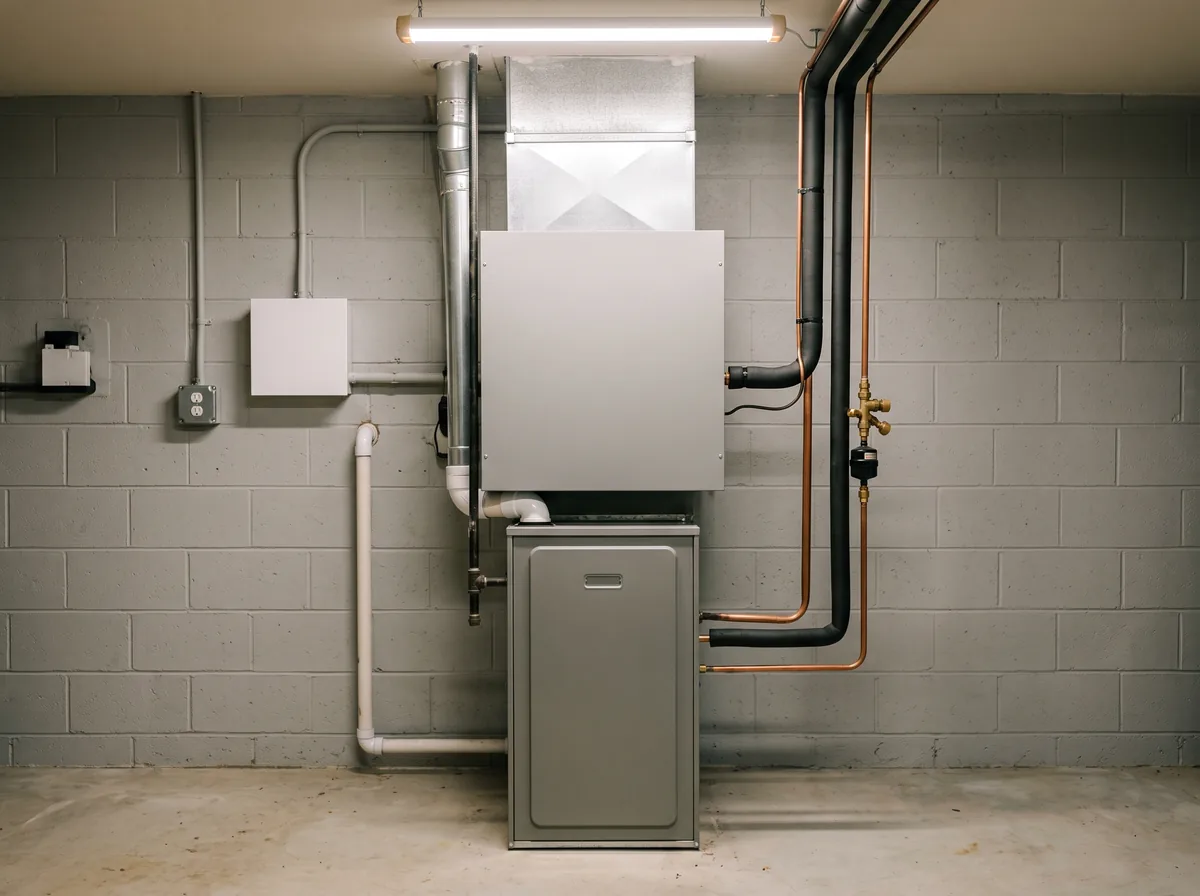
Here is how Canada’s HFC policy impacts an existing R410A system compared to modern equipment:
| Question | Existing R410A System | New System (A2L / Next-Gen) |
|---|---|---|
| Is mandatory replacement required? | No. Existing units can remain in operation for their entire lifespan. | Not applicable. |
| Can the unit still be serviced? | Yes, by a certified technician. | Yes, by a certified technician trained on A2Ls. |
| Where is the refrigerant type listed? | Printed on the outdoor condenser rating plate. | Detailed in equipment specification sheets. |
| Refrigerant Safety Class | A1 (Non-flammable). | A2L (Mildly flammable; updated install standards apply). |
| Who can perform repairs? | Licensed HVAC technicians only. | Licensed HVAC technicians only. |
| Key question for contractors | “What are the best repair options for my current system?” | “Which refrigerant does this proposed equipment use?” |
Refrigerant Rules in Ontario: Federal vs. Provincial Jurisdiction
When understanding refrigerant compliance, it is important to distinguish between federal authority and provincial rules:
- Federal Scope (ECCC): Canada’s Ozone-depleting Substances and Halocarbon Alternatives Regulations (ODSHAR) apply nationally to manufacturers and bulk importers. Meanwhile, the separate Federal Halocarbon Regulations (FHR) apply specifically to refrigeration systems on federal lands, federal works/undertakings, and federal departments or Crown corporations—not to ordinary residential homes.
- Ontario Residential Scope (MECP): For privately owned residential homes across Ontario, refrigerant service, handling, and environmental protection are governed provincially by the Ministry of the Environment, Conservation and Parks under Ontario Regulation 463/10 (Ozone Depleting Substances and Other Halocarbons) made under the Environmental Protection Act.
Under Ontario Regulation 463/10, venting refrigerants, including R410A, directly into the atmosphere is illegal. Anyone servicing refrigeration loops, handling halocarbons, or purchasing refrigerant in Ontario must hold a valid, provincially recognized Ozone Depletion Prevention (ODP) certification issued through the Heating, Refrigeration and Air Conditioning Institute of Canada (HRAI) on behalf of the province.
Homeowners should avoid DIY refrigerant top-up kits or uncertified tradespeople. If your unit is struggling with reduced cooling output or suspected refrigerant loss, turn off the system and schedule a visit through our certified cooling repair service team.
Regulatory Notice
This content provides general informational guidance on environmental rules affecting residential HVAC systems in Ontario. Equipment requirements and municipal building codes may vary. Always consult an ODP-certified technician to assess your specific equipment.
Frequently Asked Questions
Do I have to replace my R410A air conditioner in Canada?
No. Federal HFC phase-down regulations target bulk production and import consumption limits, not installed equipment. Existing R410A systems remain fully legal to operate, maintain, and service.
Can technicians still service and recharge R410A systems in Ontario?
Yes. Certified HVAC technicians holding a valid Ontario refrigerant handling certificate (O. Reg. 463/10) can legally service, repair, and recharge R410A residential cooling systems.
What refrigerants are replacing R410A in new HVAC systems?
HVAC manufacturers are transitioning new residential equipment to lower-GWP refrigerants such as R454B and R32, which carry an A2L mild flammability rating.
Download the Free Checklist
A practical guide with essential questions to ask your technician regarding refrigerant choices and servicing options.
Next Steps for Your Home
Understanding the R410A phase-down comes down to knowing your cooling equipment’s current age, condition, and maintenance history. Locate the outdoor nameplate to identify your refrigerant type, and during your regular seasonal maintenance, have your technician inspect the system for proper operating pressures and sound line integrity.
If you need expert guidance on maintaining an existing unit or exploring equipment replacement options, book a free estimate with our team. We’ll evaluate your system and provide straightforward, clear solutions.
