 Proudly Canadian


 Home
Home Heating
 Cooling
 Heat Pumps
 Air Quality
 Other
OtherHVAC Tips and Tricks
Understanding SEER and HSPF Ratings: What They Mean for Your HVAC System

Feb
If you’ve ever shopped for a new air conditioner, furnace, or heat pump, you’ve likely seen SEER and HSPF ratings. These numbers are meant to give homeowners an idea of how energy-efficient a system is, but let’s be honest, most people have no idea what they mean. Whether you’re buying a new AC unit for your home or looking into installing a heat pump as an upgrade to an old system, understanding these ratings can help you make the right choice.
At North Wind HVAC, we’ve been working with heating and cooling equipment for years, and we know firsthand how annoying it is to compare models. The truth is, energy efficiency ratings aren’t just numbers, they impact how much you’ll pay in utility bills, how long your system will last, and how well it will heat or cool your home. Whether you’re installing a new furnace for winter, swapping out your central air conditioning system before summers hit, or trying to figure out if a heat pump is a good year-round heating and cooling solution, this guide will clarify everything you need to know about SEER and HSPF ratings.
What is SEER? Understanding Cooling Efficiency
Breaking Down SEER Ratings
SEER stands for Seasonal Energy Efficiency Ratio, and it is a measurement of how efficiently your heat pump or air conditioner will cool your house over the course of a whole cooling season. It’s somewhat like the gas mileage of a car, the higher the SEER rating, the less electricity your system needs to cool your house.
SEER is calculated by taking the total cooling output of the system (in British Thermal Units or BTUs) during a cooling season and dividing it by the total energy input in watt-hours. What you have just got is a number that gives you an idea of how efficient a unit is when it comes to cooling.
What’s a Good SEER Rating for HVAC Appliances?
Years ago, it wasn’t unusual for air conditioners to have a SEER rating of 8 or 10, which meant they weren’t exactly energy-efficient by today’s standards. In Canada, any new system must have a minimum SEER rating of 14, but some of the best models available today have SEER ratings of 20 or higher. The higher the SEER, the less electricity your system needs to cool your home.
SEER Rating | Efficiency Level | Potential Energy Savings |
| 8-12 | Low Efficiency | Higher energy bills |
| 13-16 | Standard Efficiency | Moderate savings |
| 17-21 | High Efficiency | Significant savings |
| 22+ | Ultra-Efficient | Maximum savings |
If you’re considering installing a new AC unit in your home or looking at heat pump options for both cooling and heating, choosing a system with a high SEER rating can lower your electricity bills over time. Even if your old air conditioner still runs, upgrading to a more energy-efficient unit can mean spending a lot less money on cooling during the summer.
<img loading="lazy" decoding="async" class="wp-image-12426 size-full" title="heat pump installation energy savings” src=”https://northwindhvacpro.ca/wp-content/uploads/2025/02/heat-pump-installation-energy-savings.webp” alt=”heat pump installation energy savings” width=”1500″ height=”1000″ srcset=”https://northwindhvacpro.ca/wp-content/uploads/2025/02/heat-pump-installation-energy-savings.webp 1500w, https://northwindhvacpro.ca/wp-content/uploads/2025/02/heat-pump-installation-energy-savings-650×433.webp 650w, https://northwindhvacpro.ca/wp-content/uploads/2025/02/heat-pump-installation-energy-savings-1024×683.webp 1024w, https://northwindhvacpro.ca/wp-content/uploads/2025/02/heat-pump-installation-energy-savings-768×512.webp 768w, https://northwindhvacpro.ca/wp-content/uploads/2025/02/heat-pump-installation-energy-savings-600×400.webp 600w” sizes=”auto, (max-width: 1500px) 100vw, 1500px” />
What is HSPF? Measuring Heating Efficiency
Understanding HSPF Ratings
While SEER is used to measure cooling efficiency, HSPF (Heating Seasonal Performance Factor) is what you should look at when it comes to heating efficiency, especially if you’re thinking about installing a heat pump to replace an old furnace or want to make sure your system will work well in the winter months.
HSPF is calculated similarly to SEER. It measures how much heat a heat pump produces over a heating season compared to the total electricity it consumes. The higher the HSPF, the more efficient the heat pump is at warming your home.
What’s a Good HSPF Rating?
Older heat pumps had HSPF ratings as low as 6, meaning they weren’t very efficient when it came to heating. Today, modern units must have an HSPF of at least 8.2, and high-efficiency models have ratings of 10 or more.
HSPF Rating | Efficiency Level | Potential Savings |
| 6-7 | Low Efficiency | Higher energy costs |
| 8-9 | Standard Efficiency | Moderate savings |
| 10+ | High Efficiency | Significant savings |
If you live in a place like Ontario, where winters can be long and brutally cold, choosing a heat pump with a high HSPF rating is critical. A system with a low rating will struggle to heat your home efficiently, leading to higher energy bills and possibly the need for emergency heat pump repair when the system gets overworked.
SEER vs. HSPF: Which One Matters More?
Both SEER and HSPF ratings are important, but which one you should prioritize depends on how you use your system.
- If you mainly rely on central air conditioning in the summer and use a separate furnace for heating in the winter, SEER is the most important rating to look at.
- If you’re installing a heat pump to replace your traditional heating system, HSPF is just as important as SEER because your unit will be working year-round.
Feature | SEER | HSPF |
| Measures | Cooling Efficiency | Heating Efficiency |
| Applies To | Air Conditioners & Heat Pumps | Heat Pumps Only |
| Higher is Better? | Yes | Yes |
| Standard Efficiency | 14-16 SEER | 8-9 HSPF |
| High Efficiency | 17+ SEER | 10+ HSPF |
If you’re looking at heat pump installation as a way to lower your heating and cooling costs, you’ll want to find a model with a balance of both high SEER and HSPF ratings.
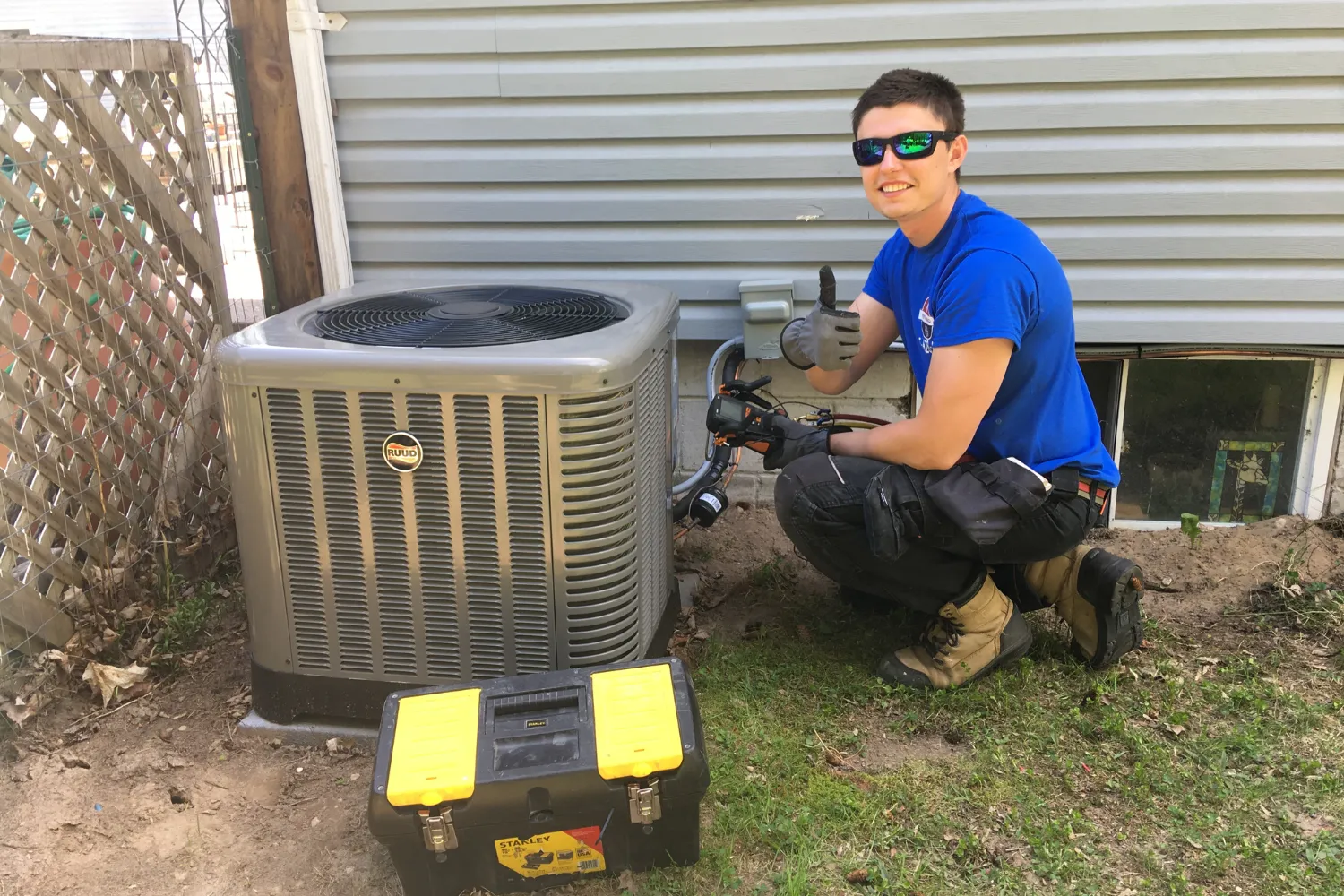
Is Upgrading to a High-Efficiency System Worth It?
A lot of homeowners wonder if upgrading their HVAC system is really worth it, especially if their current system still works. The truth is that while a high-efficiency system costs more upfront, the long-term savings on your electricity bill make a huge difference.
A system with a SEER rating of 18 instead of 14 can lower your cooling costs by up to 30%. A heat pump with an HSPF rating of 10 or higher will use far less electricity than an older model, especially during the coldest months of the year. If you’ve noticed that your furnace is leaking water or your AC isn’t cooling like it used to, upgrading to a more energy-efficient system can be a smart long-term investment.
Why Choose North Wind HVAC For A High-Efficiency System?
At North Wind HVAC, we help homeowners choose the right heating and cooling systems for their needs. Whether you’re installing a new AC unit for summer, upgrading your furnace to a more energy-efficient model, or looking at heat pump options to replace your old heating system, we have the experience to guide you through the process.
- Fully Licensed & Insured – Our team is certified and highly trained.
- 7 Days a Week Emergency Repairs – If your system breaks down in extreme weather, we’re here to help.
- Expert Installations – Whether it’s a furnace, AC, or heat pump installation, we get the job done right.
- Energy Efficiency Experts – We’ll help you find the best SEER and HSPF-rated system for your home.
Why Knowing About SEER and HSPF Ratings Is Crucial?
Understanding SEER and HSPF ratings is key to choosing the most energy-efficient HVAC system for your home. If you’re thinking about installing a new heating or cooling system, these ratings will help you get the best balance of comfort and energy savings.
If you’re not sure where to start, North Wind HVAC is here to help, just reach out to us! Whether it’s furnace repair, heat pump installation, or upgrading your AC system, we’ve got the expertise to make sure you get the best system for your home.
✓ Expert Note — Our NATE-certified technicians have installed and serviced heat pump systems across Ontario, including cold-climate inverter-driven systems down to -30°C. The information below reflects current equipment capabilities and Ontario rebate programs as of 2025.
Frequently Asked Questions About Heat Pumps in Ontario
Do heat pumps work in Ontario winters?
Modern cold-climate heat pumps work effectively down to -25°C to -30°C. Technologies like Mitsubishi Hyper-Heat, Bosch IDS, and Carrier Infinity are specifically engineered for northern climates. That said, most Ontario homeowners use a heat pump as their primary system with a gas furnace backup (a “dual-fuel” setup), which provides excellent efficiency with full cold-weather coverage. A heat pump alone is viable in most of southern Ontario with the right equipment selection.
How much does a heat pump cost in Ontario in 2025?
A ducted air-source heat pump (replacing or supplementing a central AC) costs $4,500–$9,000 installed, depending on brand and HSPF2 rating. Cold-climate models from Mitsubishi, Carrier, or Bosch sit at the higher end. A ductless mini-split heat pump (single zone) runs $3,000–$5,500. Multi-zone ductless systems range from $7,000–$15,000+. Rebates can significantly reduce these costs – see the Greener Homes Grant and Canada HEAT programs.
What rebates are available for heat pumps in Ontario in 2025?
Several programs stack in 2025. The Canada Greener Homes Grant offers up to $5,000 for a qualifying heat pump (requires EnerGuide audit). The federal Oil to Heat Pump Affordability program offers up to $10,000 for homes heating with oil. Enbridge Gas sometimes offers additional incentives for dual-fuel setups. Some municipalities have local programs. Our team can walk you through the full rebate stack for your specific situation – this is an area where the paperwork is worth doing.
What is the difference between a heat pump and a central air conditioner?
A central air conditioner only cools. A heat pump does both – it cools in summer by moving heat out of the home, and heats in winter by extracting heat from outdoor air and moving it inside. The cooling side is essentially identical in operation and appearance. The key difference is the reversing valve in a heat pump that allows bidirectional refrigerant flow. Cost-wise, a heat pump typically costs $500–$1,500 more upfront than a comparable central AC but eliminates or reduces gas heating costs.
What HSPF2 rating should I look for in a heat pump for Ontario?
HSPF2 (Heating Seasonal Performance Factor, 2023 standard) measures heating efficiency. The new minimum in Canada is 7.5 HSPF2. For Ontario’s climate, look for a minimum of 9 HSPF2 for good performance. Cold-climate models rated 10–12 HSPF2 offer the best winter efficiency but come at a higher upfront cost. Pairing a 9.5+ HSPF2 heat pump with a gas backup furnace (dual-fuel) is the most popular and cost-effective setup for Ontario.
Can I use a heat pump as my only heating source in Ontario?
In most of southern Ontario (Toronto, GTA, Barrie area), a properly sized cold-climate heat pump can serve as a sole heating source, with standard resistance backup heating for extreme cold days. However, a dual-fuel system (heat pump + gas furnace) is generally more cost-effective because natural gas is cheaper per BTU than electricity when temperatures drop below -10°C to -15°C. The right answer depends on your specific home, utility rates, and how often you hit extreme cold.
How long does a heat pump last?
Air-source heat pumps typically last 15–20 years with regular maintenance. Because they run year-round (unlike AC-only units), annual servicing is especially important – including coil cleaning, refrigerant checks, filter changes, and defrost cycle verification. Ground-source (geothermal) heat pumps last 20–25 years for the indoor components and up to 50 years for the ground loop. North Wind HVAC services all major heat pump brands.

Written by
Maria Chen
Home Comfort & Energy Efficiency Specialist | NATE Certified
Maria Chen is a NATE-certified HVAC specialist and home comfort advisor with a decade of experience helping Ontario homeowners choose, install, and optimize energy-efficient heating and cooling systems. Holding a G2 Gas Technician licence and HRAI certification, Maria has deep expertise in heat pump technology, central air conditioning, and government rebate programs including the Canada Greener Homes Grant. She has a background in mechanical engineering and specializes in helping homeowners navigate system upgrades.
