 Proudly Canadian


 Home
Home Heating
 Cooling
 Heat Pumps
 Air Quality
 Other
OtherUncategorized
Why Does My Furnace Keep Turning On And Off (Short-Cycling)?
Jan
Quick Answer (For Homeowners in a Hurry)
If your furnace keeps turning on and off repeatedly, it’s usually experiencing short-cycling. This happens when something causes the heating system to shut itself down before completing a full heating cycle. Common causes include restricted airflow, thermostat issues, dirty filters, or built-in safety systems activating to prevent overheating or gas-related hazards.
Short-cycling should never be ignored. It can make your home uncomfortable, increase energy bills, and put unnecessary wear on your furnace. In some cases, it’s also a safety warning – especially with gas furnaces.
What Does Short-Cycling Really Look Like?
Short-cycling is when your furnace turns on, shuts off, and then turns back on again before it has finished heating your home. Instead of completing a full heating cycle, the system keeps stopping and starting over and over again.
It doesn’t always look dramatic, but it almost always feels wrong.
Most homeowners notice it not because something is visibly broken, but because the house never quite gets warm.
You may notice:
- Your furnace starts up, runs briefly, then shuts off
- Warm air comes out of the vents, but only for a short time
- The house still feels cool or unevenly heated
- The furnace turns off, then back on again a few minutes later
- This cycle repeats constantly throughout the hour
What’s the difference between normal cycling and short-cycling?
A furnace is supposed to turn on and off – that part is normal. What matters is how often it does it and how long it runs each time.
A good rule of thumb is:
Normal operation:
- 2-4 heating cycles per hour
- Each cycle lasts 5-15 minutes, depending on outdoor temperature and insulation
Short-cycling:
- Furnace runs for seconds to 2-3 minutes
- Shuts off before the home is properly heated
- Restarts again shortly after
When a furnace short-cycles, it’s never given enough time to do its job properly.
Reasons Why Your Furnace Is Short-Cycling
Short-cycling usually means your furnace is trying to heat, but something is forcing it to shut down early, either because it can’t move air properly, it’s getting the wrong “instructions” from the thermostat, or a safety sensor is stepping in to prevent damage.
1. Dirty or Clogged Air Filter (Most Common Cause)
A furnace needs to “breathe.” The air filter traps dust so it doesn’t build up inside the system, but when the filter gets packed full, air can’t move through fast enough.
Why does this cause short-cycling?
- Less air moves through the furnace
- Heat builds up inside the unit instead of being carried into your home
- A safety switch shuts the burner or heating elements off to prevent overheating
- Once it cools down, it tries again… and the cycle repeats
How to check if your air filter needs to be changed:
✅ Safe for homeowners
- Turn the thermostat down or switch it to “OFF”
- Locate your filter (usually in the return duct, side of the furnace, or inside the blower compartment door)
- Slide it out and look at it under a light
- If you can’t see much light through it, it’s likely too clogged
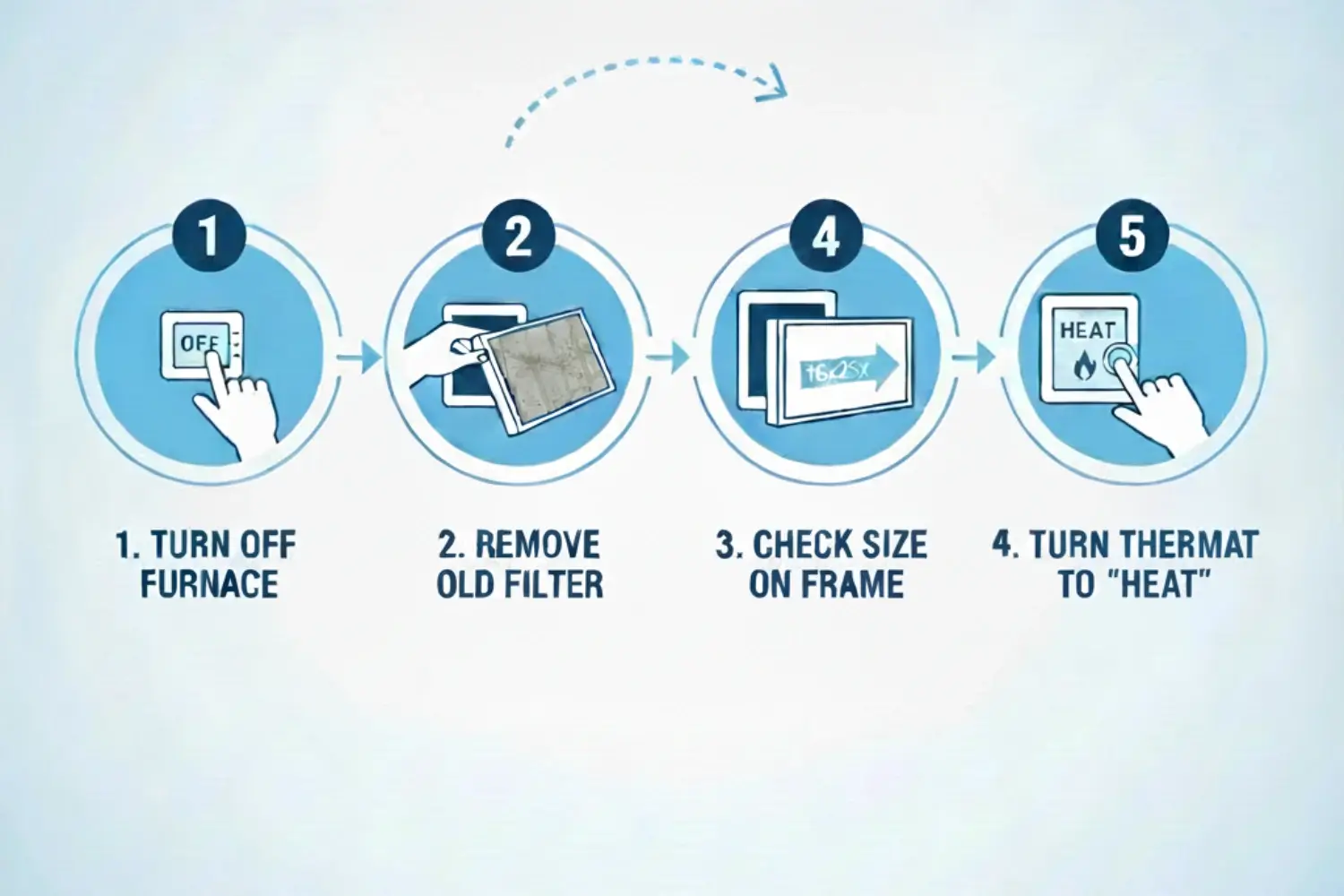
Step-by-step: How to change your filter
- Turn the furnace off (thermostat “OFF” is fine for filter changes)
- Remove the old filter
- Check the size printed on the frame (example: 16x25x1)
- Insert the new filter with the arrow pointing toward the furnace
- Turn the thermostat back to “HEAT” and test
2. Restricted Airflow (Closed Vents, Blocked Returns, or Duct Problems)
Even with a clean filter, your furnace can short-cycle if it can’t move air around your home properly.
Why does this cause short-cycling?
Your furnace is designed to heat air and push it through your ducts. If air can’t flow:
- Heat gets trapped inside the furnace
- Internal temperatures rise too fast
- The furnace shuts itself off for safety
- It restarts once it cools
How to check if restricted airflow is the problem:
✅ Safe for homeowners
- Make sure vents are open (you don’t need every vent 100% open, but don’t close most of them)
- Check that return vents (the larger vents) aren’t blocked by furniture or rugs
- Look for obvious “pinched” flexible ductwork in unfinished basements
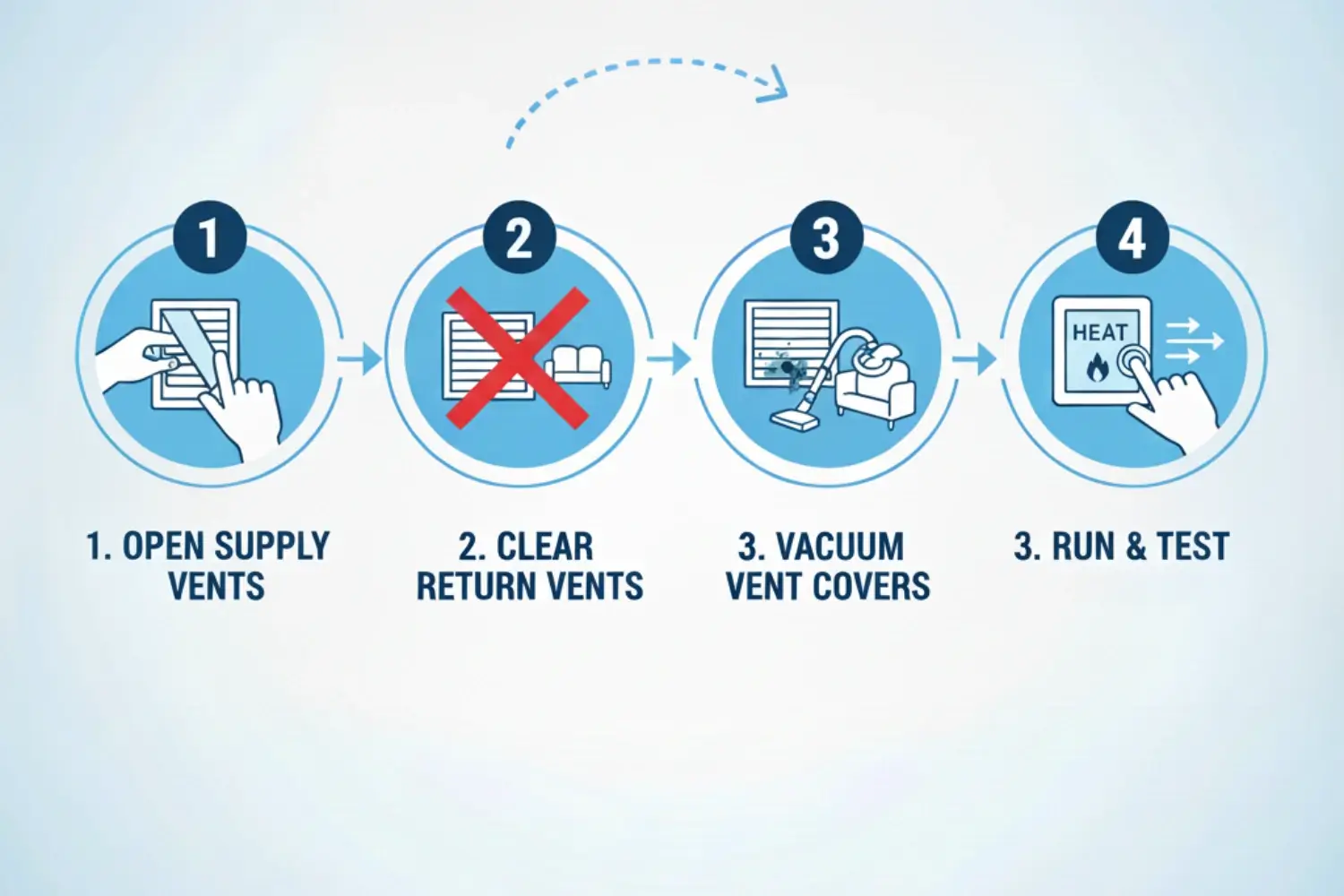
Step-by-step: How to fix
- Walk through the house and open supply vents in most rooms
• Aim for 80–90% open - Clear all return vents (no couches, baskets, curtains, or rugs covering them)
- Vacuum visible dust from vent covers
- Run the furnace and see if the airflow improves within a few minutes
Helpful tip: Closing vents to “push more heat to other rooms” often backfires – it can create pressure problems and lead to overheating and short-cycling.
3. Thermostat Problems (Wrong Reading = Wrong Cycling)
Sometimes the furnace is fine, it’s the thermostat giving it bad information.
Why does this cause short-cycling?
The thermostat decides when your furnace starts and stops. If it thinks the home is already warm (even when it’s not), it will shut the furnace off too early.
Common reasons why your thermostat might be having problems:
- The thermostat is near a heat source (sunlight, kitchen, a vent)
- Weak batteries cause glitches
- Loose wiring causes “phantom signals”
- An older thermostat reads temperature poorly
How to check if your thermostat is the issue:
✅ Safe for homeowners
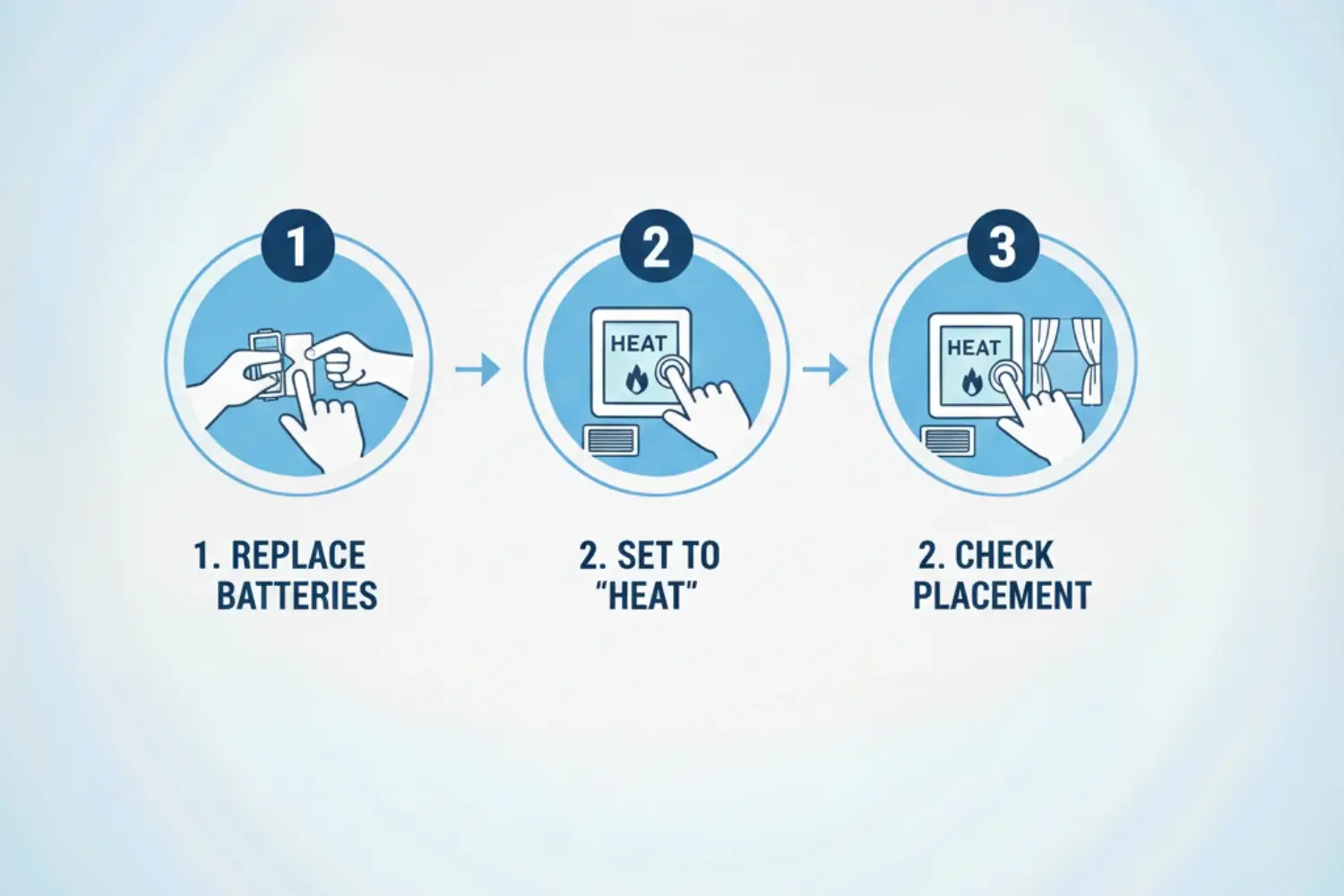
- Replace batteries (even if it still “seems fine”)
- Make sure it’s set to HEAT, not “AUTO” fan-only settings
- Check if it’s directly above a vent or near a drafty door/window
Step-by-step: Quick test
- Set thermostat to “HEAT”
- Raise the temperature setting by 2-3°C
- Listen: Does the furnace start smoothly and stay on?
- If it starts, then shuts off rapidly again, it’s likely not just the setting
Helpful tip: If your thermostat is old or unreliable, we can recommend an upgrade that fits your home and budget, and install it properly so it doesn’t cause cycling issues.
4. Furnace Overheating (High Limit Switch Tripping)
Overheating is one of the most common “hidden” causes of short-cycling.
Why does this cause short-cycling?
Your furnace has a safety switch called a high limit switch. If the furnace gets too hot inside, it shuts off the heat to prevent damage or fire risk.
This often happens when airflow is restricted, but it can also happen if internal components are dirty or failing.
Signs your furnace is overheating:
- Heat stops, but the fan keeps running
- Short cycles get worse over time
- You smell a hot, “metal” or dusty burning smell
- The furnace may run 2-5 minutes, shut off, then restart again
What you can do if you think your furnace is overheating:
✅ Safe for homeowners
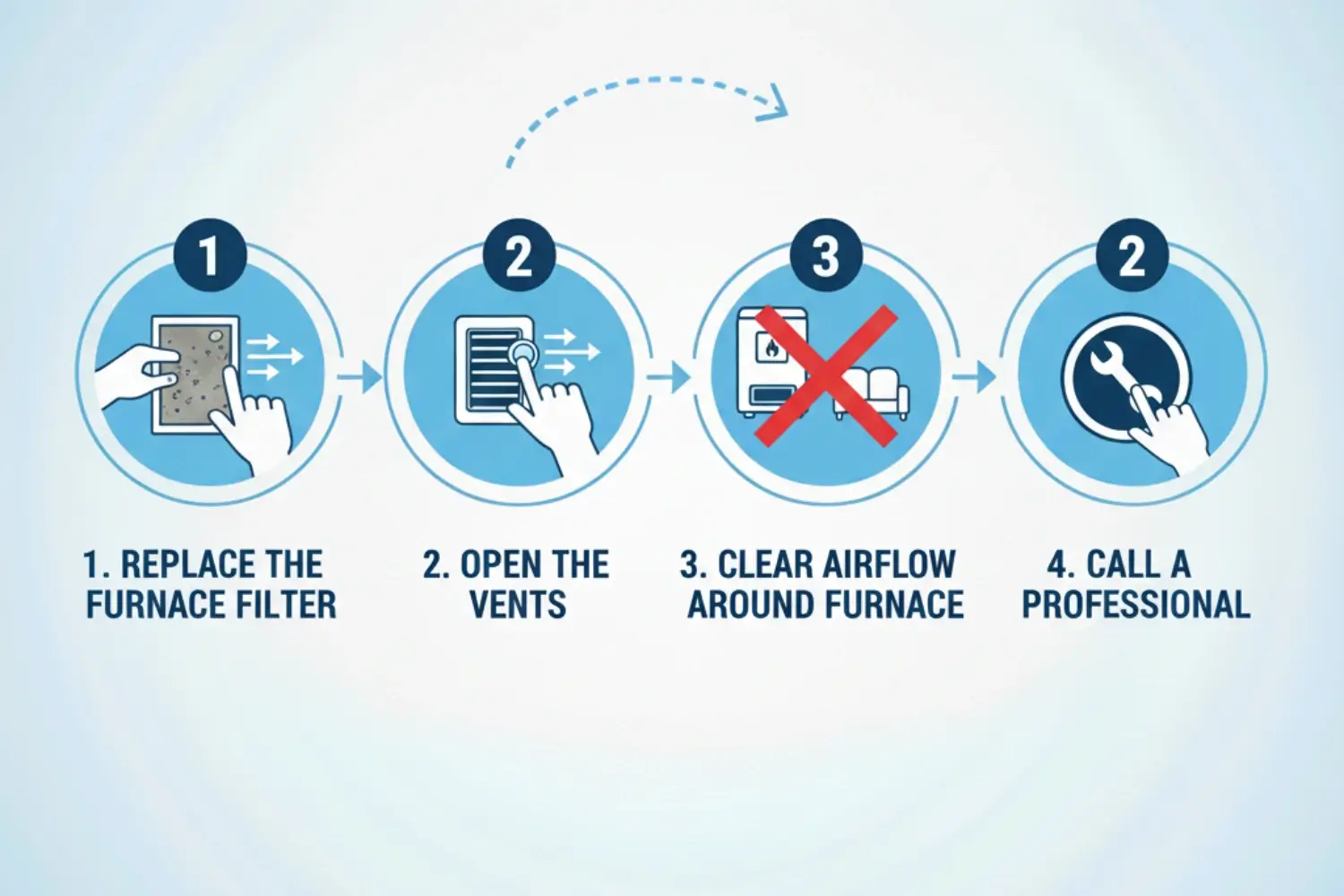
- Replace the filter
- Open vents and clear returns
- Make sure nothing is blocking airflow around the furnace (don’t store boxes right up against it)
When it is time to call a professional:
If it keeps overheating after those steps, it needs a professional inspection. Repeated overheating can damage expensive components (and in gas furnaces, can affect the heat exchanger).
5. Dirty Flame Sensor (Gas Furnaces Only)
If you have a gas furnace, a dirty flame sensor is a top reason for short-cycling.
Why does this cause short-cycling?
The flame sensor’s job is to confirm that the burners are actually lit. If it can’t “detect” the flame (because it’s dirty), the furnace shuts off the gas as a safety measure.
Signs you have a dirty flame sensor:
- Furnace tries to start, runs for 5-30 seconds, shuts off
- You may hear it attempt to restart multiple times
- Home doesn’t warm up even though it keeps “trying”
What to do: Call a professional
❌ Not safe for homeowners
This is not a homeowner DIY recommendation because it involves opening panels and working near burners and gas components. The safe move is to call a TSSA-certified furnace repair technician (like our team) to clean and test it properly.
6. Blocked Exhaust / Venting Issues (Gas Furnaces Only)
Gas furnaces must safely vent combustion gases outdoors. If venting is blocked, the furnace will shut down to protect your home.
Why does this cause short-cycling?
If the furnace can’t push exhaust out:
- Safety sensors stop the system
- The furnace may short-cycle or shut down completely
- There’s a potential risk of carbon monoxide buildup
Signs you might have a blocked exhaust:
- Furnace starts, then shuts down quickly, especially in very cold weather
- You notice more condensation around the furnace area
- You see ice or snow buildup near exterior vent pipes
- You get error codes (often pressure switch-related)
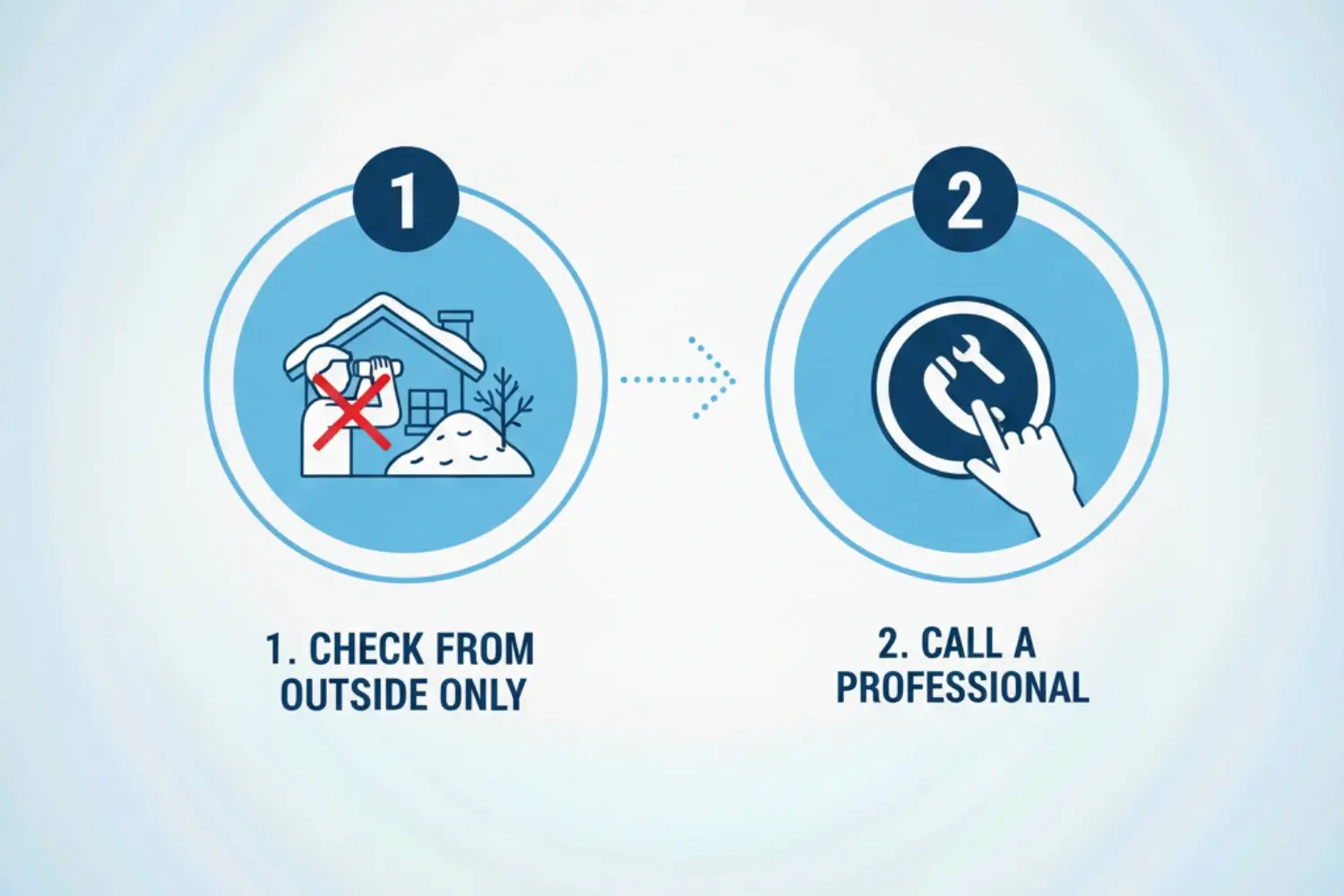
Safe homeowner check: Visual check ONLY
- From outside the home only: look at the vent termination and see if it’s blocked by snow/ice/debris
⚠️ If you suspect venting issues, turn the furnace off and call a professional. This is a safety-critical issue.
7. Oversized Furnace (Or Sometimes Undersized)
Sizing matters more than most people realize.
Why does an oversized furnace short-cycle?
If the furnace is too powerful:
- It heats the area near the thermostat very fast
- The thermostat hits the set temperature quickly and shuts it off
- The rest of the home may still be chilly
- The cycle repeats often
Signs your furnace is the wrong size:
- Quick blasts of heat, then off again
- Temperature swings (too warm, then cool)
- Hot and cold spots around the house
- This has happened since the furnace was installed or replaced
What homeowners can do:
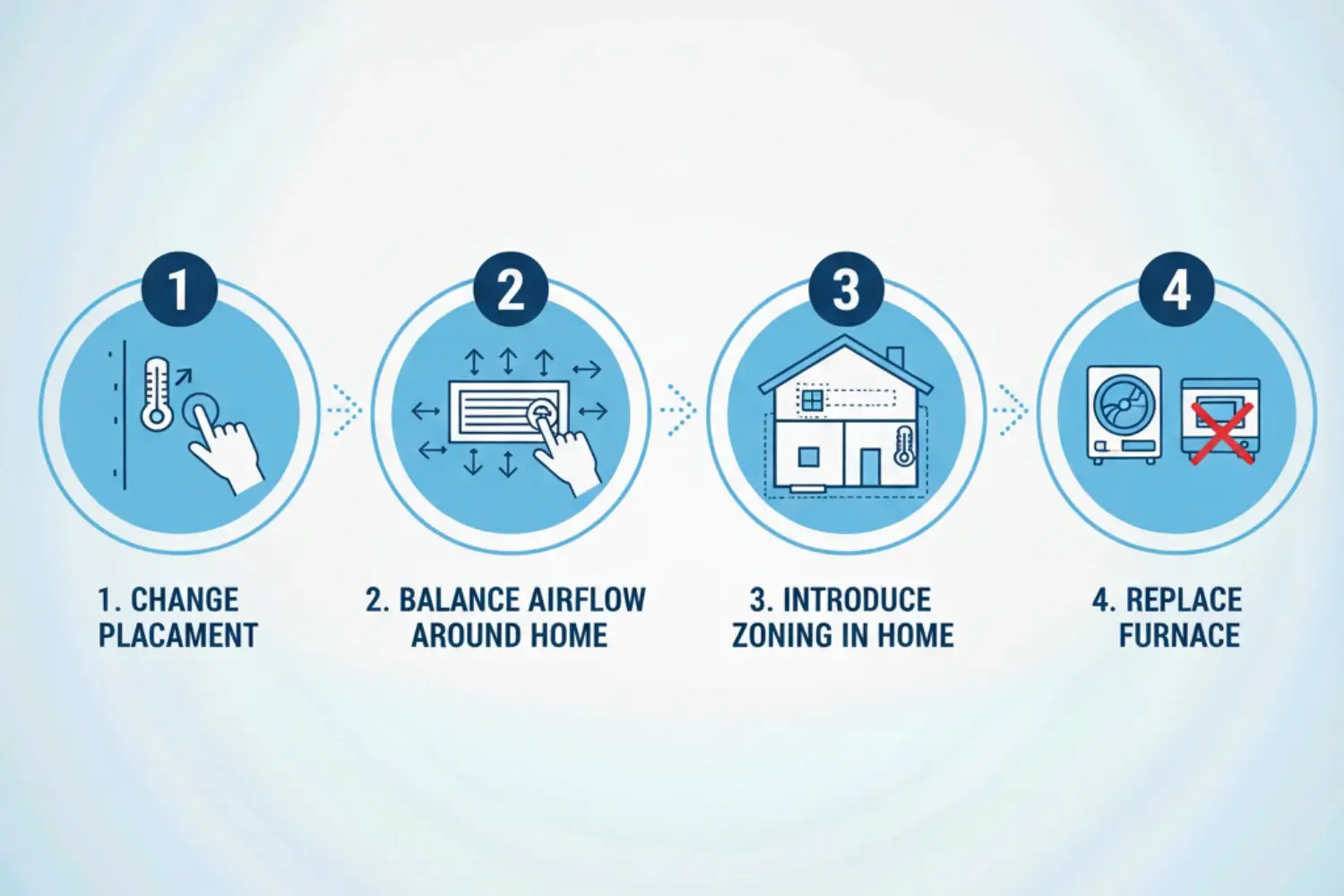
There’s no safe DIY fix for sizing, but if you suspect this, we can assess it and talk through options (sometimes thermostat placement, airflow balancing, or zoning can help – furnace replacement isn’t always the only path).
8. Blower Motor or Blower Wheel Issues
Your blower motor is the “fan” that pushes warm air through your ducts. If it’s failing or the blower wheel is clogged with dust, airflow drops.
Why does this cause short-cycling?
- Less air moves across the heat exchanger/heating elements
- The furnace overheats
- Safety switches shut it down early
- It restarts once cooled
Signs you have issues with your blower motor:
- Weak airflow even with a clean filter
- Rattling, humming, or squealing sounds
- Burning smell or higher electricity bills
- Furnace struggles to heat the home evenly
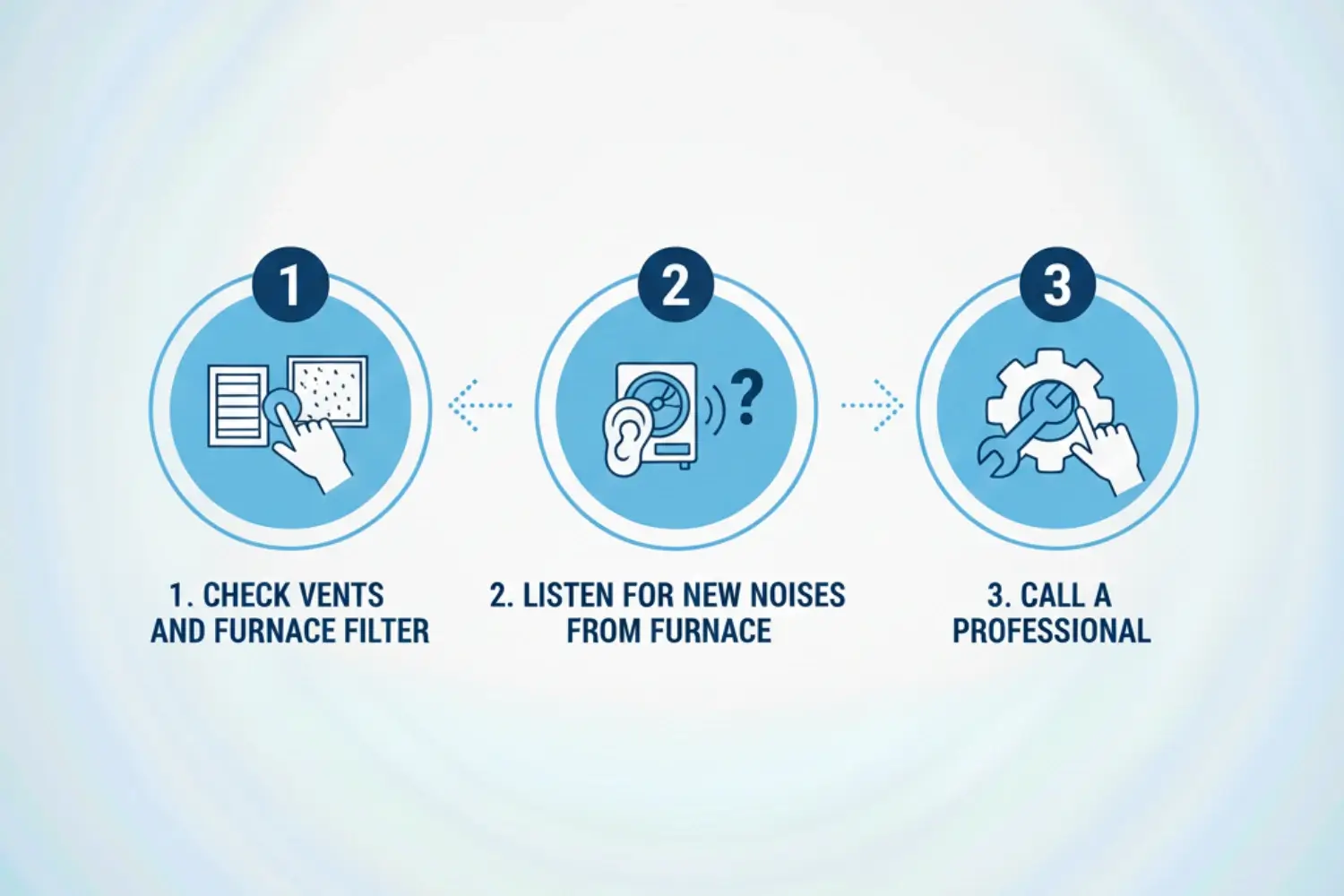
What homeowners can safely do:
✅ Safe for homeowners
- Check vents and filter
- Listen for new noises and note when they happen
This one typically needs a professional diagnosis and repair.
Quick “Most Likely Cause” Clues (Helpful shortcut)
- Shuts off after 2–5 minutes: filter/airflow/overheating
- Shuts off after 5–30 seconds: flame sensor (gas) or ignition-related issue
- Short-cycling got worse suddenly: filter/vent blockage/thermostat issue
- Short-cycling since day one: sizing or installation/setup issue
When It’s Safe for Homeowners to Fix Themselves
We only recommend low-risk checks that do not involve tools, wiring, or gas components:
✅ Replace or clean the air filter
✅ Open blocked vents and returns
✅ Replace thermostat batteries
✅ Confirm thermostat settings
✅ Clear visible debris around vents (not inside)
❌ Do not remove furnace panels
❌ Do not touch gas lines or burners
❌ Do not bypass safety switches
When You Should Call a Professional
You should contact us right away if:
- Short-cycling continues after filter replacement
- Furnace runs for less than a minute
- You smell gas or burning
- The system locks out or shows error codes
- The furnace is under 10 years old (often repairable)
- The furnace shuts off before warming the home
We are TSSA-certified, meaning all gas work is performed safely, legally, and to Ontario standards.
Don’t Ignore Short-Cycling: If In Doubt Call A Professional
A furnace that keeps turning on and off is not just annoying – it’s your system asking for help.
At North Wind HVAC, we help homeowners across Barrie, Toronto, and the GTA stay safe, comfortable, and confident in their heating systems. Whether it’s a simple fix or a more complex issue, we’ll explain what’s happening, why it matters, and what your best options are – without pressure.
If your furnace has started short-cycling, don’t wait for the coldest night of the year.
👉 Book a professional inspection with North Wind HVAC today and get your heat running safely and efficiently again.
