 Proudly Canadian


 Home
Home Cooling
 Heating
 Heat Pumps
 Air Quality
 Other
Other
A clean and healthy indoor environment is needed for a productive and happy workplace – that’s why improving office air quality is crucial. In commercial offices, poor air quality can lead to tiredness, headaches, and even long-term health problems for employees – we don’t want that.
At North Wind HVAC , we’ve worked with many businesses across Southern Ontario from Toronto and the GTA to Barrie to improve commercial air quality. Over the years, we’ve learned that small, consistent changes can make a big difference when it comes to keeping that office air and work feeling fresh.
Here are 10 easy steps you can take to improve office air quality. These tips are tried and true, designed to make it easy for you to take charge of your AC.
1. Change Your HVAC Filters
Your heating and cooling system plays a big role in how clean the air is inside your office. One of the easiest ways to improve indoor air quality is by upgrading the filters in your HVAC system. Clean filters trap more dust, pollen, and other tiny particles that float in the air. This means cleaner, healthier air for everyone in the building.
We recommend getting professional advice on which filter is best for your system. North Wind HVAC can help you install new commercial HVAC systems properly.
2. Maintain Your Commercial AC System
Even the best HVAC system won’t work well if it’s not cleaned and checked regularly. Dust does what dust does and builds up like nobody’s business inside ducts, fans, and coils. If left alone to continue growing, the air quality can cause mold which can become dangerous to health.
That’s why regular maintenance is so important. At North Wind HVAC, we recommend scheduling a regular AC maintenance appointment with us, we’ll deal with:
- Clean the ducts, vents, and filters
- Add lubrication to moving parts
- Inspect electrical components
- Make sure everything is running smoothly
Keeping your HVAC system in good shape is one of the most reliable ways to support better indoor air conditions.
3. UV Lights For Improving Office Air Quality
Who knew UV lights could be so helpful? Not only does it keep you safe from potential mold, it also looks pretty cool.
They can be installed inside your HVAC unit to kill bacteria, viruses, and mold before they spread through your office. This is a great way to add an extra layer of protection to your indoor air.
These UV lights can be especially helpful in busy work spaces where germs spread easily. The UV light works quietly in the background, helping to keep the air safer for everyone. If you’re thinking about installing UV purification to your system, always have them installed by a qualified HVAC expert for safety and effectiveness.
4. Use Smart Indoor Air Quality Monitors
New technology makes it easier than ever to track and improve office air quality. Using smart monitors is a modern and useful way to stay on top of your indoor environment. These monitors measure things like humidity, temperature, and carbon dioxide levels.
When connected to your building’s system, they can alert you if something is off and sometimes even fix itself! These real time insights help you act quickly without second thought.
5. Bring in More Fresh Air with Ventilation Systems
Fresh outdoor air helps reduce stuffiness and keeps carbon dioxide levels low. Without enough fresh air, people may feel tired or lose focus.
Ventilation systems bring in clean outdoor air while keeping your office comfortable. Some models even save energy by using the warmth or coolness from the air being removed.
Book an appointment to discuss ventilation setup would work best for your office layout. Adding proper ventilation is a strong step in improving office air quality.
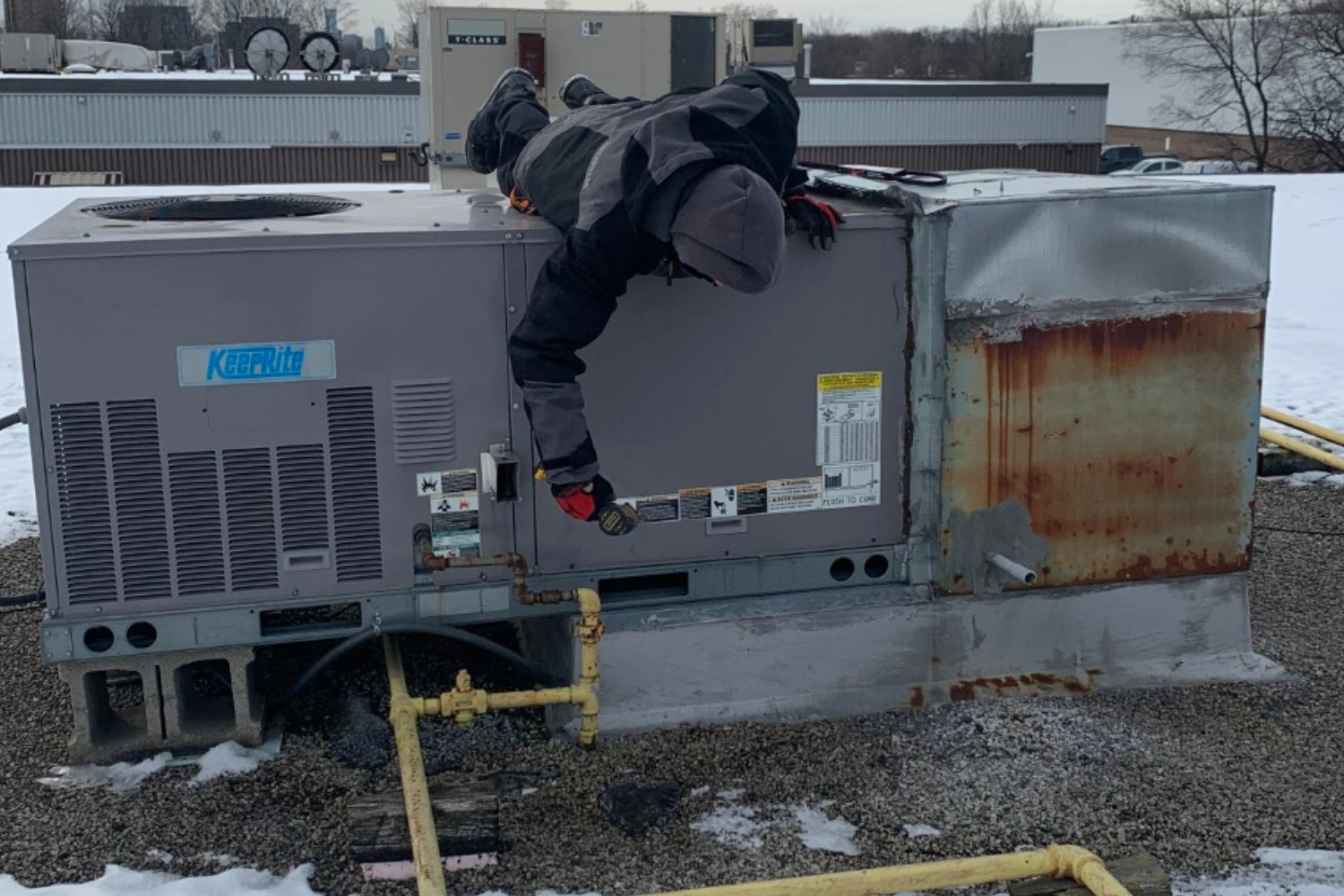
<img loading="lazy" decoding="async" class="aligncenter wp-image-12709 size-full" title="commercial AC installation GTA” src=”https://northwindhvacpro.ca/wp-content/uploads/2025/05/commercial-AC-installation-GTA.webp” alt=”rooftop commercial HVAC system installation in the GTA for improving office air quality” width=”1500″ height=”1000″ srcset=”https://northwindhvacpro.ca/wp-content/uploads/2025/05/commercial-AC-installation-GTA.webp 1500w, https://northwindhvacpro.ca/wp-content/uploads/2025/05/commercial-AC-installation-GTA-650×433.webp 650w, https://northwindhvacpro.ca/wp-content/uploads/2025/05/commercial-AC-installation-GTA-1024×683.webp 1024w, https://northwindhvacpro.ca/wp-content/uploads/2025/05/commercial-AC-installation-GTA-768×512.webp 768w, https://northwindhvacpro.ca/wp-content/uploads/2025/05/commercial-AC-installation-GTA-600×400.webp 600w” sizes=”auto, (max-width: 1500px) 100vw, 1500px” />
6. Control Humidity Levels to Improve Office Air Quality
Humidity has a big impact on how comfortable and healthy your office feels. If the air is too dry, people might get sore throats or dry eyes. If it’s too damp, mold and dust mites can grow. We understand the importance of satisfying all types of people.
Commercial dehumidifiers help keep the air at just the right level – between 30% and 50% humidity. This range is ideal for most office spaces. Balancing humidity is an often-overlooked but important step in maintaining a healthy indoor environment.
7. Seal Leaky Ducts
Air ducts carry warm or cool air throughout your building. But if they’re leaking, they can pull in dust, dirt, and outside pollution.
Fixing leaky ducts improves airflow and stops dirty air from entering your space. It also saves energy, since your system doesn’t have to work as hard.
North Wind HVAC can inspect your ductwork and offer professional duct maintenance that help protect your indoor air – a quick and simple win for improving your office’s air quality!
8. Choose Office Materials That Don’t Pollute the Air
Some everyday office items like carpets, furniture, cleaning products, and printers can release chemicals into the air. These can cause unpleasant smells and affect how healthy the indoor air feels.
To avoid this, try to use:
- Low-chemical paints and finishes
- Eco-friendly cleaning supplies
- Less printing to cut down on toner dust
- Good airflow after any office upgrades
- Making smarter choices about what’s in your office helps improve the air without changing your setup too much
This is a simple but strong way to maintain a clean indoor and outdoor environment.
9. Use Portable Air Purifiers
Sometimes, even with a good HVAC system, you may want extra help cleaning the air in specific areas like meeting rooms or open-plan offices.
Portable air purifiers with high efficiency particulate air (HEPA) filters can remove small particles like pollen, smoke, and dust. They’re a great addition to your existing system, especially during allergy season or in high-traffic zones.
They’re easy to set up and can make a noticeable difference in how clean the air feels. Using purifiers is another effective method for supporting better indoor air.
10. Teach Employees About Improving Office Air Quality
Last but not least, improving air quality isn’t just about machines, it’s also about habits. It might be overlooked but small actions by your team can help keep the air cleaner:
- Keeping desks clean
- Avoiding strong perfumes or sprays
- Reporting air issues early
- Storing food properly to prevent pests and smells
Encourage your team to be mindful about the office’s air quality. You can do this through training sessions or reminders to raise awareness about the dangers of lower air quality. Getting everyone involved is a smart part of maintaining a healthy indoor space.
Create a Healthier Office with Better Air
Improving office air quality isn’t complicated. With the right strategies, regular maintenance, and some thoughtful choices, you can create a healthier and more comfortable place for your team.
From checking your HVAC system and sealing leaks to using air purifiers and teaching good habits, each step contributes to a cleaner, fresher indoor environment.
If you’re ready to take action and make your office a cleaner, healthier place, consider reaching out to a local HVAC expert for support. For those in Southern Ontario, North Wind HVAC offers reliable service across Toronto, the GTA, and Barrie.
We can work together to make your office a better place to breathe, one step at a time. If you’re looking to professionally install residential AC system.
✓ Expert Note — Our commercial HVAC team has serviced and installed systems in office buildings, warehouses, restaurants, and retail spaces across the GTA. The compliance information below is current as of 2025 Ontario regulations.
Frequently Asked Questions About Commercial HVAC in Ontario
What are the TSSA requirements for commercial furnaces in Ontario?
The Technical Standards and Safety Authority (TSSA) regulates natural gas equipment in Ontario under the Technical Standards and Safety Act. Commercial gas furnaces and HVAC systems must be installed and serviced by TSSA-licensed Gas Technicians. All commercial gas appliances require a valid installation permit, and equipment must comply with CSA B149.1 (Natural Gas and Propane Installation Code). Annual inspections are strongly recommended and required by most commercial insurance policies.
How often should a commercial HVAC system be serviced?
Commercial HVAC systems should be serviced at minimum twice per year: once in spring (pre-cooling season) and once in fall (pre-heating season). High-demand environments like restaurants, data centres, or manufacturing facilities may require quarterly service. Regular commercial HVAC maintenance includes filter replacement, coil cleaning, refrigerant checks, belt and bearing inspection, and controls calibration. Neglected maintenance is the leading cause of premature equipment failure and emergency breakdowns.
What commercial HVAC systems are best suited for Ontario’s climate?
For Ontario’s mixed climate, the most common commercial systems are: rooftop packaged units (RTUs) for small to mid-size commercial buildings, Variable Refrigerant Flow (VRF) systems for multi-zone office buildings, commercial heat pumps for buildings looking to reduce gas consumption, and hydronic (hot water) boiler systems for large commercial or industrial spaces. The best choice depends on building size, usage pattern, existing infrastructure, and energy costs.
What indoor air quality standards apply to commercial buildings in Ontario?
Ontario follows ASHRAE Standard 62.1 for ventilation and indoor air quality in commercial buildings. This standard specifies minimum outdoor air ventilation rates by occupancy type. The Ontario Building Code also references ASHRAE 90.1 for energy efficiency in HVAC systems. Post-COVID, many building operators have increased ventilation rates and added HEPA or MERV-13 filtration, UV air purification, and demand-controlled ventilation (DCV) to improve occupant health and safety.
How do I choose the right commercial AC unit size for my Ontario business?
Commercial AC sizing requires a proper Manual J (or ACCA) heat load calculation accounting for building envelope, internal heat gains (equipment, lighting, people), ventilation requirements, and local climate data. A common rough estimate is 1 ton per 300–500 square feet for office space, but this varies significantly by use type. A restaurant kitchen or server room requires far more cooling per square foot than a standard office. Always have a licensed HVAC engineer or contractor perform a proper load calculation.
Are there energy rebates for commercial HVAC upgrades in Ontario?
Yes. The Save on Energy Industrial Accelerator and Business programs (run by the Independent Electricity System Operator, IESO) offer incentives for commercial equipment upgrades that reduce electricity consumption. Enbridge Gas offers commercial prescriptive rebates for high-efficiency heating equipment. The Canada Greener Buildings Initiative supports large commercial retrofits. Our commercial team can help identify applicable programs for your building type and upgrade scope.
What is the difference between commercial and residential HVAC?
Commercial HVAC systems are larger, more complex, and often modular. Key differences: commercial systems are typically installed on rooftops (packaged rooftop units), use higher-voltage electrical systems (208V or 480V three-phase), require more complex controls and zone management, and must meet more stringent ventilation standards (ASHRAE 62.1). Maintenance and installation require commercial-specific licensing and experience. Residential HVAC companies are not always equipped to handle commercial systems – verify your contractor’s commercial experience before engaging them.

Written by
Oleksii Sitalo
Oleksii Sitalo is an HVAC professional with hands-on experience in heating, cooling, air conditioning, furnace systems, and home comfort solutions.
