 Proudly Canadian


 Home
Home Heating
 Cooling
 Heat Pumps
 Air Quality
 Other
OtherHVAC Tips and Tricks
Keeprite Furnace Troubleshooting: Error Codes, Models & Flame Sensor Guide
Apr
Keeprite furnaces are known for their durability and efficiency. But like all home appliances, your furnace may need some attention from time to time. In some cases, the problems you experience with your furnace could be due to something as simple as a door or valve not closed properly.
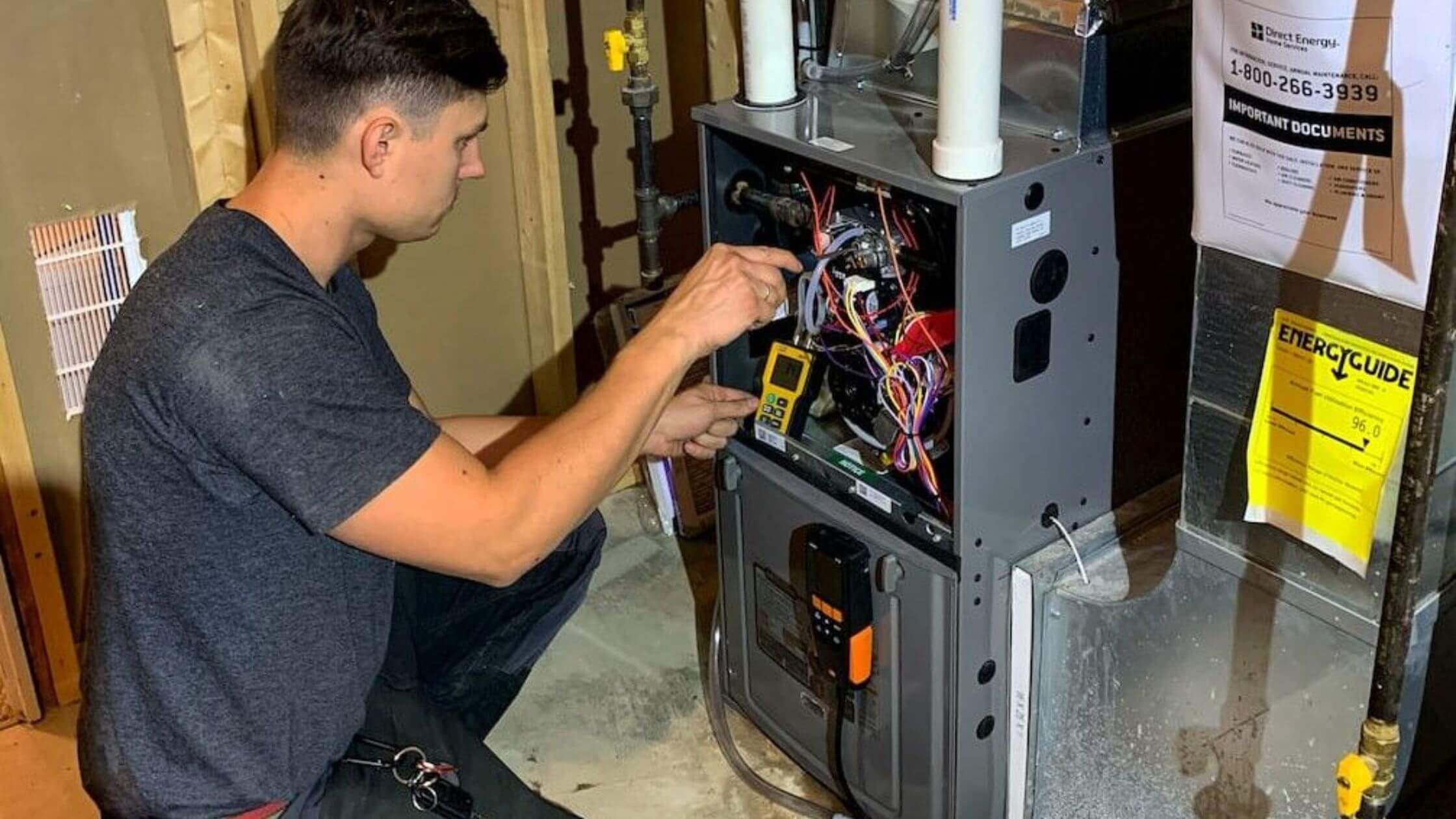
Determining what is wrong with your HVAC system can be quite the task. That’s why it’s important to know what some of the error codes mean so you know whether you are dealing with a simple fix, or something that needs a qualified technician to address. Thanks to advanced technology, Keeprite furnace troubleshooting has never been simpler.
The furnace error codes can help you troubleshoot issues you may be having with your HVAC system. By analyzing a series of flashing LEDs and codes, you can quickly diagnose what the problem is and quickly be on your way to solving the problem.
Below is list of some of the common Keeprite error codes, what they mean and how you can fix the problem:
| CODE | MEANING | FIX |
| LED Off | This means that the 24 VAC or 115 VAC is off. It could be due to the fuse being open. | The first thing to check is the door switch to ensure it is closed. If it is, then the problem is likely being caused by a short circuit. |
| LED On | Indicates that there is a furnace control error. When this happens, it will cause a 1-hour delay. If the error code is displayed right after a power reset, you will need to replace the control. | The furnace will auto-reset in an hour. |
| Heartbeat | This code is nothing to worry about. It is part of the system’s normal operation so no action needs to be taken to address it. | N/A |
| 2 Flashes | This code means that the pressure switch is closed when it should be open. | When this happens, it is often due to some item blockage in the pressure tubing. Check to see if there is an object causing an obstruction in the pressure tubing. |
| 3 Flashes | What the means is that the pressure switch is open. On single stage models the pressure switch should be closed. This can also indicate that the low pressure switch is open when it should be closed on 2 stage. | To fix, you will need to check for a number of things that could be causing the problem. Check the furnace for excessive wind, a defective inducer motor or pressure switch, insufficient combustion air supply, an obstruction in the pressure tubing or a disconnected pressure tubing. Another cause could be an improper vent size or restricted vent. |
| 4 Flashes | This code means that the limit switch or rollout is open. | Check to see if the vent is restricted, a dirty air filter, defective blower or loose blower wheel. Also check for proper vent sizing or excessive wind. |
| 5 Flashes | This means that the flame is inconsistent. | This may mean that there is a gas valve that is leaking or that the gas valve is stuck in an open position. Check for either one of these conditions. |
| 6 Flashes | This will result in the furnace failing to ignite or losing its flame while the furnace is switched on. | First check for an ungrounded flame sensor, a defective hot service igniter or no inlet gas pressure, oxide buildup. Also check to see if the manual valve is shut off or if there is an inadequate flame carryover or rough ignition. |
| 6+1 Flashes | This will cause a temporary lockout and indicate that the maximum number of trials, which is four, has been reached. This will result in a 3-hour delay | The furnace will auto reset after three hours. |
| 7 Flashes | This will result in a temporary lockout which is caused by the rollout switch being open for too long (more than two minutes). This will cause a 1-hour delay and the rollout switch must be reset manually. | Furnace will auto reset after three hours |
| 8 Flashes | This is a permanent lockout caused by the gas valve relay contact being accidentally closed, or a gas valve that is improperly wired. | Look to see if you can find a gas valve that is improperly wired or a defective control valve. |
| 10 Flashes | This means that the line voltage polarity has been reversed. If this is twinned, you’ll need to refer to the kit for instructions. | Correct the polarity as instructed in the manual. |
If the solutions listed above do not solve your Keeprite furnace problems, contact a qualified HVAC technician who can help diagnose and fix the problem.
✓ Expert Note — Our TSSA-licensed furnace technicians have diagnosed and repaired thousands of furnaces across the GTA and Simcoe County – the answers below reflect real-world experience from Ontario homes.
Common Keeprite furnace models in Ontario
Keeprite is made in Canada and is one of the more common brands you’ll see in Ontario homes, particularly in the GTA. Here’s a quick breakdown of the main product lines and what to know about each one.
| Series | Efficiency | Motor Type | Notes |
|---|---|---|---|
| G9MXE / G9MXL | 96% AFUE | Single speed | Most common high-efficiency replacement; straightforward to service |
| G9MXD | 96% AFUE | Multi-speed | Two-stage gas valve; runs quieter at low fire in mild weather |
| G9MVE / G9MVD | 97% AFUE | Variable speed ECM | Top-tier efficiency; modulating gas valve; very quiet; more complex to diagnose |
| G8MXL | 80% AFUE | Single speed | Standard efficiency; metal flue venting; common in older GTA homes |
| N9MSB / N9MSE | 80% AFUE | Multi-speed | Upflow/horizontal; often found in homes replacing older builder-grade units |
The G9MXE and G9MXD are the most frequently serviced models in Ontario. If you’re looking at a Keeprite repair and not sure which model you have, the model number is on a sticker on the inside of the access panel – usually upper left or right.
How to clean a Keeprite flame sensor (6 flash code fix)
The 6-flash error code on a Keeprite furnace typically means the furnace lit, the sensor didn’t confirm the flame, and the control board shut everything down. The most common cause isn’t a bad sensor – it’s oxide buildup on the sensor rod. You can clean this yourself in about 10 minutes.
What you’ll need: a flathead screwdriver, a 1/4″ nut driver or small socket, and a piece of fine steel wool or emery cloth (220 grit works well).
- Shut off the power to the furnace at the disconnect switch or breaker
- Turn off the gas supply valve on the gas line going into the furnace
- Remove the lower access panel to expose the burner compartment
- Locate the flame sensor – it’s a metal rod, roughly 3-4 inches long, mounted near the burners with a single mounting screw and a wire connector
- Disconnect the wire connector and remove the mounting screw
- Lightly rub the metal rod with steel wool or emery cloth – just enough to remove the white/grey oxidation. Don’t scrub aggressively; you’re cleaning the surface, not reshaping the rod
- Wipe off any residue
- Reinstall the sensor, reconnect the wire, replace the panel
- Restore power and gas, then cycle the furnace
If the furnace still flashes 6 after cleaning the sensor, the next suspects are: no gas pressure at the valve, a faulty igniter (if the furnace isn’t lighting at all), or a grounding issue with the sensor circuit. At that point, it’s worth calling a tech – diagnosing gas pressure and igniter failures requires equipment and TSSA licensing.
Frequently Asked Questions About Furnace Repair in Ontario
How much does furnace repair cost in Ontario in 2025?
Most furnace repairs in Ontario cost between $150 and $600 depending on the issue. A minor fix like a faulty ignitor or dirty flame sensor runs $150–$250. Replacing a heat exchanger or control board can reach $400–$700. Emergency or after-hours service typically adds $80–$150. Getting a diagnostic quote upfront is the best way to avoid surprises.
How long does a furnace repair typically take?
Most furnace repairs are completed in 1–3 hours during a single service visit. Simple fixes like replacing a capacitor, thermocouple, or flame sensor take under an hour. More complex repairs – such as replacing a blower motor or control board – may require a return visit if parts need to be ordered. Same-day parts availability is common in the GTA.
Is it worth repairing an old furnace, or should I replace it?
A general rule of thumb: if your furnace is over 15 years old and the repair cost exceeds 50% of the price of a new unit, replacement is usually the better investment. Newer high-efficiency furnaces (96%+ AFUE) can cut your heating bills by 20–30% compared to older models. Our technicians can give you an honest assessment – we will tell you if a repair makes sense rather than push for a replacement.
What are the most common furnace problems Ontario homeowners face?
The most common issues we see in Ontario homes include: dirty or faulty flame sensors (causes short cycling), failed ignitors (furnace will not start), blocked condensate drains (common in high-efficiency units), cracked heat exchangers (a safety concern – causes CO leakage), failing blower motors, and thermostat wiring issues. Annual maintenance catches most of these before they become emergencies.
Can I get same-day furnace repair in the GTA or Barrie?
Yes. North Wind HVAC offers same-day furnace repair 7 days a week across the Greater Toronto Area, Barrie, and surrounding communities. Call by early afternoon for the best chance at same-day service. Emergency after-hours service is also available for urgent no-heat situations.
Do I need a TSSA-licensed technician to repair my furnace in Ontario?
Yes. In Ontario, any work on a natural gas furnace must be performed by a TSSA-licensed Gas Technician (G1 or G2 designation). Unlicensed repairs are illegal, void your warranty, and can create serious safety hazards including carbon monoxide leaks. Always verify your technician’s TSSA credentials before any gas appliance work.
My furnace has a red tag on it – what does that mean?
A red tag means a TSSA inspector has identified a safety hazard and ordered the appliance shut down until repairs are made. Red tags are serious – do not attempt to override or restart the furnace. A licensed Gas Technician must inspect and repair the issue, then have it re-inspected before the unit can be returned to service. North Wind HVAC specializes in red tag removal and can typically handle the full process in one visit.

Written by
James Kowalski
Senior HVAC Technician | G1 Gas Technician (TSSA)
James Kowalski is a senior HVAC technician with over 15 years of hands-on experience servicing residential and commercial heating systems across the Greater Toronto Area. Licensed by the Technical Standards and Safety Authority (TSSA) with a G1 Gas Technician designation, James specializes in complex furnace diagnostics, high-efficiency system installations, and emergency heating repairs. He holds HRAI certification and has trained dozens of junior technicians throughout his career.
